


Trace the technological lineage from mechanical pedometers of the 1960s through early programmable calculators to understand how quantified fitness emerged from Cold War anxieties about national physical fitness. These primitive devices, initially accessible only to affluent white men in corporate wellness programs, laid groundwork for democratized health tracking while simultaneously establishing problematic norms about body surveillance and performance metrics.
Examine how the 1980s aerobics boom intersected with nascent heart rate monitors and programmable watches, revealing gendered marketing strategies that positioned women as aesthetic-focused exercisers while men received “serious” athletic technology. This period’s innovations reflected broader cultural tensions around leisure time, consumer capitalism, and the growing privatization of health responsibility previously managed through community and institutional structures.
Investigate the pivotal shift during the smartphone revolution of 2007-2015, when GPS-enabled devices and accelerometer technology transformed fitness tracking from niche athletic tools into mass-market lifestyle products. This democratization paradoxically intensified class divisions, as algorithmic gamification created new hierarchies based on data literacy and access to premium features, while simultaneously enabling communities previously excluded from traditional gym culture to participate in fitness discourse.
Analyze how contemporary app ecosystems embed historical biases within their algorithmic architectures, from calorie calculations based on mid-century white male metabolic studies to activity recognition systems trained predominantly on specific body types and movement patterns. Understanding this evolutionary trajectory reveals how seemingly neutral technological tools carry forward decades of cultural assumptions about race, ability, gender, and economic status, shaping not just how we track fitness but how we conceptualize healthy bodies and legitimate physical activity itself.
The Pre-Smartphone Era: Digital Fitness Tracking Before Apps
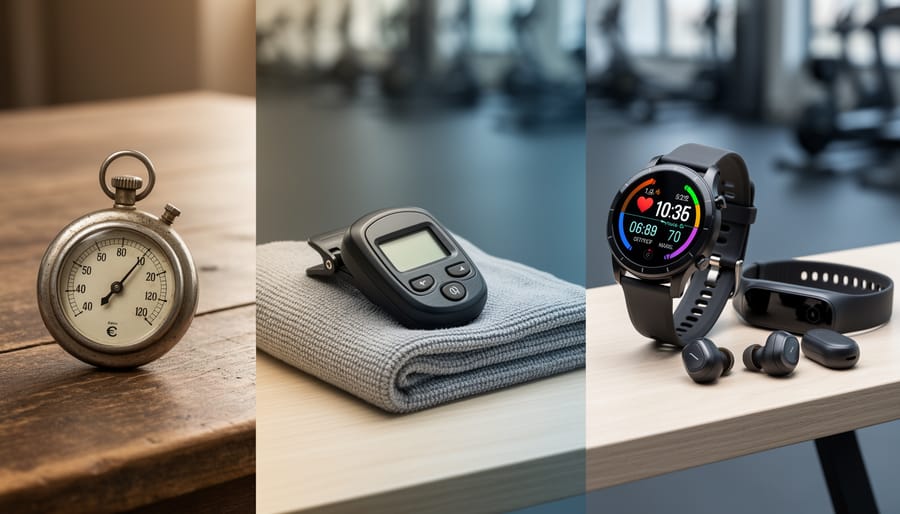
Mechanical and Early Digital Pedometers
The mechanical pedometer emerged as a commercially viable consumer product in the 1960s, building upon centuries-old step-counting principles dating back to Leonardo da Vinci’s conceptual designs and Thomas Jefferson’s documented use of similar devices. Japanese manufacturer Yamasa Tokei revolutionized personal fitness tracking in 1965 with the release of the Manpo-kei, meaning “10,000 steps meter,” a device that embedded a specific numerical goal into the hardware itself. This seemingly arbitrary target stemmed from marketing considerations rather than empirical research, yet it profoundly shaped global fitness culture and remains influential in contemporary tracking applications.
Throughout the 1970s and 1980s, mechanical pedometers proliferated across socioeconomic boundaries, appearing in corporate wellness programs, weight-loss clinics, and consumer retail markets. These spring-lever mechanisms translated vertical hip movement into step counts, democratizing quantified fitness beyond laboratory settings. The 1990s witnessed the transition toward digital pedometers with LCD displays and memory functions, enabling users to track weekly patterns and historical data. This evolution represented more than technological advancement; it reflected growing cultural investment in self-surveillance and numerical validation of physical activity, laying conceptual groundwork for smartphone-based fitness tracking ecosystems that would emerge in subsequent decades.
Desktop Software and the Quantified Self Movement
The early 2000s witnessed a pivotal shift in fitness culture as desktop software transformed how individuals conceived of their physical activity. Programs like Microsoft HealthVault (2007) and early versions of Fitday (2003) pioneered the digitization of exercise logs, moving beyond simple paper journals to sophisticated tracking systems that could calculate calories, monitor workout routines, and generate progress charts. This technological evolution coincided with the emergence of the Quantified Self movement, a cultural phenomenon that positioned self-knowledge through numbers as a pathway to optimization.
The desktop era of fitness tracking reflected broader societal trends toward data-driven decision-making and personal accountability. Unlike their smartphone successors, these programs required deliberate engagement—users sat at computers to manually input information, creating a ritualistic practice of self-examination. This barrier to entry meant early adopters were often tech-savvy individuals with disposable income and time, raising questions about accessibility and who could participate in this new culture of health optimization.
The Quantified Self movement, formally established around 2007 by Wired magazine editors Gary Wolf and Kevin Kelly, elevated fitness tracking from mere record-keeping to a philosophical practice. Adherents believed that systematic self-measurement could reveal hidden patterns and enable unprecedented control over bodily performance. However, this movement also sparked critical discussions about the reduction of human experience to metrics, the psychological impact of constant self-surveillance, and whether quantification truly enhanced wellbeing or simply created new forms of anxiety around physical achievement and bodily discipline.
The First Wave: Early Fitness Apps and the Smartphone Revolution (2008-2012)
GPS-Enabled Running Apps: Making Every Run Measurable
The integration of Global Positioning System technology into fitness applications between 2008 and 2012 fundamentally restructured how individuals experienced outdoor exercise. Apps like RunKeeper (2008), Nike+ GPS (2010), and Strava (2009) transformed running and cycling from private activities into digitally documented performances complete with pace, elevation, and route mapping capabilities.
This technological shift carried profound implications beyond mere measurement. GPS-enabled apps democratized access to data previously available only to elite athletes with specialized equipment, yet simultaneously created new forms of stratification. Urban runners in areas with consistent satellite coverage and safe, scenic routes enjoyed distinct advantages over those in poorly mapped neighborhoods or regions with limited infrastructure—a disparity that often reflected existing patterns of socioeconomic inequality.
The social features introduced by these platforms proved equally transformative. Strava’s segment leaderboards turned ordinary streets into competitive arenas, while sharing capabilities allowed users to broadcast achievements across social networks. This created what scholars have termed “quantified communities”—groups bound not by physical proximity but by shared metrics and digital recognition. However, this sociality remained predominantly accessible to those with smartphone technology and data plans, effectively creating a two-tiered system of fitness participation.
From a gender perspective, GPS tracking introduced complex dynamics. While some women embraced route-sharing for safety purposes, others expressed concern about privacy vulnerabilities inherent in broadcasting location data. These applications thus embodied the paradox of modern fitness culture: simultaneously empowering through information while potentially reinforcing surveillance and competitive pressures that could undermine intrinsic motivation for physical activity.

Calorie Counting Goes Mobile
The late 2000s witnessed a profound shift as calorie counting migrated from paper journals and websites to smartphones, fundamentally altering how individuals engaged with food and their bodies. Applications like MyFitnessPal, launched in 2005 but gaining massive adoption after its iPhone release in 2009, transformed nutrition tracking into an omnipresent practice. This digitization represented more than mere convenience; it embedded diet consciousness into the fabric of daily life, making the quantification of food intake a normalized, even expected, behavior within health-conscious communities.
The mobile revolution democratized access to nutritional databases that previously required professional consultation or extensive research. Users could now scan barcodes, instantly accessing calorie counts and macronutrient breakdowns while standing in grocery aisles or restaurant lines. This immediacy created what scholars have termed “nutritional surveillance,” where eating became inseparable from data collection and self-monitoring. The gamification elements—progress bars, achievement badges, and social sharing features—borrowed from gaming culture to reinforce tracking behaviors, blurring boundaries between health management and digital entertainment.
However, this democratization carried significant cultural implications. The predominance of weight-loss narratives within these platforms reflected and reinforced particular body ideals, often rooted in Western beauty standards that marginalized diverse body types and cultural food practices. The algorithmic logic of these applications typically defaulted to deficit-based eating, positioning weight loss as the primary health goal regardless of individual circumstances. This technological framing of nutrition raised critical questions about who benefits from constant dietary monitoring and whose bodies are deemed worthy of optimization in an increasingly data-driven fitness landscape.
The Wearable Integration Era: When Apps Met Devices (2013-2017)
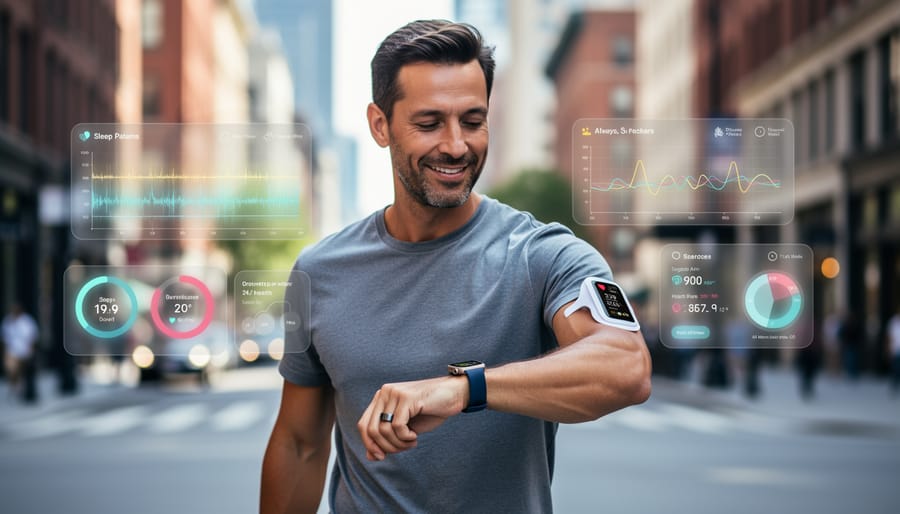
The Rise of All-Day Activity Tracking
The transition from episodic exercise tracking to continuous activity monitoring represents perhaps the most significant cultural shift in fitness technology’s brief history. Beginning in the early 2010s, devices like the Fitbit and Jawbone UP introduced a paradigm where every step, every movement throughout the day became quantifiable data. This wasn’t merely a technological advancement; it fundamentally reimagined what it meant to be physically active.
Historically, fitness had been compartmentalized into discrete sessions—a morning jog, an evening gym visit, a weekend tennis match. The body at rest was considered neutral, neither contributing to nor detracting from one’s fitness goals. All-day tracking demolished this binary framework, transforming mundane activities like walking to the photocopier or taking the stairs into measurable fitness contributions. The 10,000 steps target, derived from a 1960s Japanese marketing campaign rather than rigorous scientific study, became a global obsession, illustrating how arbitrary metrics could reshape daily behavior when married to constant monitoring.
This shift carried profound implications for class and labor. Office workers could now gamify their sedentary environments, while manual laborers who had always engaged in physical activity suddenly received quantified validation for movements previously invisible to fitness culture. Yet this democratization also introduced new anxieties. The healthy body was no longer something achieved through dedicated training sessions but required perpetual optimization, blurring boundaries between work, leisure, and self-improvement in ways that disproportionately affected those with inflexible schedules or caregiving responsibilities.
Social Competition and Gamification
The integration of social features into fitness tracking applications between 2010 and 2015 fundamentally restructured physical activity from a private pursuit into a publicly performative practice. This transformation emerged from the convergence of social media culture and gamification theory, drawing on psychological principles of extrinsic motivation that had previously been studied in workplace and educational contexts.
Strava’s 2012 introduction of segment leaderboards exemplified this shift, allowing cyclists and runners to compete on specific route portions against thousands of invisible competitors. The feature drew from competitive sport structures while democratizing access to performance comparison, though critics noted how this intensified class divisions as athletes with expensive equipment and ample training time dominated rankings. Nike’s integration with Facebook in 2010 enabled users to broadcast workouts instantly, transforming exercise into social currency and creating what sociologists termed “conspicuous fitness consumption”—a digital-age parallel to Thorstein Veblen’s 1899 concept of conspicuous leisure.
These competitive mechanics raised substantive questions about intrinsic motivation. Research from Stanford’s Persuasive Technology Lab revealed that while leaderboards increased short-term engagement by 27 percent, they simultaneously created anxiety and discouraged participation among lower-performing users, particularly women who reported feeling judged by public metrics. The historical parallel to early twentieth-century competitive gymnastics movements becomes evident: both created hierarchies that celebrated certain body types and performance standards while marginalizing others.
Furthermore, the shareability of fitness achievements intersected problematically with existing beauty standards and body image pressures. The gamification of exercise, while increasing overall participation rates, also commodified physical improvement in ways that reproduced rather than challenged societal inequalities around fitness access and body acceptability.
The Holistic Health Movement: Beyond Exercise Tracking (2018-Present)
Mind-Body Integration and Wellness Apps
The mid-2010s marked a significant paradigm shift in fitness tracking as developers recognized that physical wellness could not be divorced from mental health. This integration reflected broader cultural conversations about holistic well-being, moving beyond the reductionist calorie-counting models that had dominated early fitness apps. Applications like Headspace and Calm, initially focused solely on meditation, began partnering with fitness trackers to create comprehensive wellness ecosystems that acknowledged the bidirectional relationship between physical exertion and psychological state.
This convergence emerged partly from growing scientific evidence documenting how chronic stress impacts physical performance and recovery. Research in psychoneuroimmunology demonstrated that cortisol levels, sleep quality, and emotional regulation directly influenced athletic outcomes—insights that fitness apps gradually incorporated into their tracking algorithms. By 2017, major platforms were measuring heart rate variability as a stress indicator, offering guided breathing exercises alongside workout recommendations.
The mind-body integration trend also reflected changing class dynamics in wellness culture. While expensive boutique studios had long marketed mindfulness-infused fitness experiences, apps democratized access to these practices, though questions remained about whether digital tools could truly replicate embodied, community-based approaches. Historical analysis reveals that this technological solution to stress management often individualized what were fundamentally social and economic problems, placing responsibility for wellness on users rather than addressing systemic workplace pressures or healthcare inequities. Nevertheless, these integrated platforms represented an important acknowledgment that tracking steps alone offered an incomplete picture of human health.
AI-Powered Personalization and Coaching
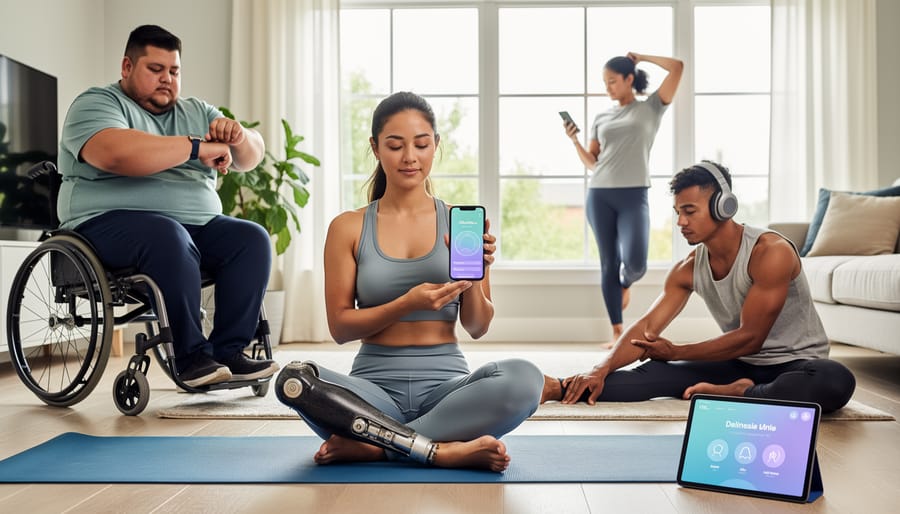
The integration of artificial intelligence and machine learning into fitness tracking represents a pivotal shift from passive data collection to active coaching paradigms. Beginning in the mid-2010s, developers moved beyond simple step counting toward algorithms capable of analyzing user behavior patterns and adapting recommendations accordingly. This transformation built upon decades of exercise science research, finally finding practical application through computational power that could process individual user data in real-time.
Early AI implementations focused on pattern recognition, identifying when users exercised most consistently or which workout types yielded measurable progress. By 2017, applications like Freeletics and Fitbod pioneered adaptive resistance training programs that modified exercises based on available equipment, user fatigue levels, and historical performance data. These systems drew from established periodization principles in strength training, translating century-old coaching methodologies into algorithmic form.
The personalization extends beyond workout design into nutritional guidance, recovery recommendations, and injury prevention. Machine learning models now predict optimal rest periods, suggest modifications for users with movement limitations, and even detect form issues through smartphone cameras. However, this technological advancement raises important questions about access and equity. Premium AI features typically require subscription fees, potentially creating a two-tiered fitness landscape where sophisticated coaching remains accessible primarily to affluent users. Additionally, training data predominantly reflects Western, able-bodied populations, risking algorithmic bias that may inadequately serve diverse body types, cultural movement practices, or non-normative fitness goals. Understanding these limitations remains essential as AI coaching continues evolving.
Cultural and Social Implications: Who Gets Counted and How
The Politics of Data: Privacy, Ownership, and Surveillance
The proliferation of fitness tracking applications has transformed personal health data into a valuable commodity, raising profound questions about privacy, ownership, and surveillance that echo historical concerns about bodily autonomy. When users sync their morning runs or sleep patterns to cloud servers, they often unknowingly enter into complex data exchange relationships where biometric information becomes corporate property. The terms of service agreements, rarely read in full, frequently grant companies broad rights to aggregate, analyze, and sometimes sell user data to third parties, including insurance companies and pharmaceutical firms.
This commodification of health data reflects a troubling historical pattern. Much as early 20th-century life insurance companies used anthropometric measurements to justify discriminatory practices based on race and class, contemporary algorithms can perpetuate inequalities through data interpretation. Research reveals that fitness apps disproportionately collect data from affluent demographics, creating datasets that may inadequately represent diverse populations and reinforce existing health disparities.
The surveillance implications extend beyond corporate interests. Government agencies have increasingly sought access to fitness tracking data for law enforcement purposes, transforming personal wellness devices into potential tools of state monitoring. This raises critical questions about consent and the boundaries between self-improvement and self-incrimination. The intersection of health tracking and surveillance capitalism demonstrates how technologies marketed as empowering can simultaneously facilitate unprecedented levels of bodily monitoring, challenging users to navigate the tension between quantified self-knowledge and privacy erosion in an increasingly data-driven society.
Inclusivity Challenges: Gender, Disability, and Diverse Bodies
Fitness tracking applications have historically embedded normative assumptions about bodies, abilities, and gender that systematically exclude marginalized users. From their earliest iterations in the 2000s, these platforms designed interfaces and algorithms around able-bodied, predominantly male physiology, creating barriers that persist today despite growing awareness of inclusivity issues.
The standard metrics programmed into fitness apps reflect this narrow vision. Default calorie calculations, for instance, have traditionally relied on formulas developed primarily through research on young, able-bodied male subjects. Women, particularly those experiencing menstrual cycles, pregnancy, or menopause, find these calculations inadequate for their physiological realities. Similarly, the emphasis on step counts as a universal fitness measure excludes wheelchair users and individuals with mobility impairments, whose physical activity manifests differently yet remains equally valid.
Gender assumptions extend beyond physiological calculations into interface design and goal-setting frameworks. Early fitness apps frequently defaulted to weight loss objectives and aesthetic-focused language that reinforced harmful beauty standards, particularly affecting women and gender-diverse users. The binary gender selections required by most platforms until recently ignored non-binary and transgender individuals, while pregnancy and postpartum tracking features remained afterthoughts rather than integrated components.
Disability representation presents perhaps the most significant design failure. Most applications lack customization options for diverse movement patterns, sensory needs, or chronic conditions. Users with invisible disabilities like chronic fatigue syndrome or fibromyalgia find that apps penalize rest days and fail to recognize energy management as legitimate fitness work. The gamification elements common in these platforms, while motivating for some, can trigger disordered eating behaviors or exacerbate body dysmorphia in vulnerable populations.
These exclusions reflect broader historical patterns in physical culture where certain bodies have been deemed more worthy of technological investment and design consideration, perpetuating inequality through digital infrastructure.
The evolution of fitness tracking applications represents far more than a simple technological advancement; it embodies a fundamental shift in how contemporary society conceptualizes health, bodily autonomy, and self-knowledge. From the early pedometers of the 18th century to today’s sophisticated algorithmic ecosystems, the tools we use to quantify physical activity have consistently reflected broader cultural anxieties about productivity, discipline, and bodily optimization. These digital platforms stand at the intersection of multiple historical trajectories: the scientific management of bodies pioneered in industrial workplaces, the democratization of health information previously gatekept by medical professionals, and the commodification of wellness as both aspiration and identity marker.
Yet this technological trajectory raises profound questions about equity and access. While fitness apps promise to democratize health by making tracking tools available beyond elite athletic or medical contexts, they simultaneously risk deepening existing inequalities. The algorithms that power these applications often encode biased assumptions about normative bodies, reflecting the historical exclusions that have long characterized physical culture. Communities already marginalized by healthcare systems may find themselves further alienated by technologies designed without their participation or needs in mind.
Looking forward, we must ask whether digital fitness tracking will genuinely expand health literacy and autonomy or merely create new forms of surveillance and social stratification. Will these tools empower diverse populations to understand and advocate for their bodies, or will they reinforce narrow definitions of fitness rooted in commercial interests and cultural homogeneity? The answers depend not on technological capability alone, but on our collective willingness to interrogate who benefits from quantified selfhood and whose bodies remain uncounted, unmeasured, and unseen in the data-driven future of physical culture.