

# Sports and Music: The Rhythm of Performance and Culture
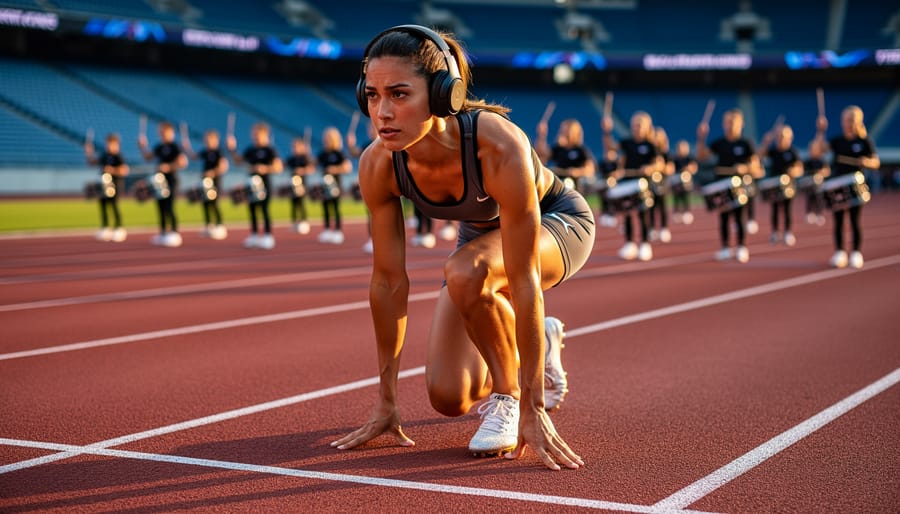
The crack of a bat meeting a baseball. The synchronized footfalls of marathon runners. The collective roar of 80,000 fans in a stadium. Sports produce their own soundtrack, and athletes have long understood that external music can transform physical performance in measurable ways.
Research shows that listening to music during exercise increases endurance by up to 15 percent while reducing perceived exertion. A 2012 study published in the Journal of Sport and Exercise Psychology found that cyclists who pedaled in time with music required 7 percent less oxygen than those cycling without musical accompaniment. These aren’t trivial margins. They represent the difference between finishing strong and hitting the wall.
But the relationship between sports and music extends far beyond workout playlists and stadium anthems. Throughout history, these two cultural forces have shaped each other in profound ways. Ancient Greek athletes trained to the aulos, a double-reed instrument, while Indigenous lacrosse ceremonies intertwined athletic competition with drumming and song. Boxing entered American popular culture through jazz-age Harlem, where the sport and the music scene fed off the same energy, the same crowds, the same struggle for recognition.
Today, this intersection reveals how race, class, and gender operate within both domains. Hip-hop artists reference athletic prowess as cultural capital. Female athletes choose entrance music that challenges traditional femininity. Working-class boxing gyms pulse with different soundtracks than elite tennis academies, each reflecting distinct cultural identities.
Understanding how sports and music converge offers practical benefits for anyone seeking better workouts. It also opens windows into broader questions about performance, identity, and community. The tempo of a song can dictate the pace of a run, but it can also signal belonging to a particular athletic subculture.
The Neurological Symphony: How Music Affects Athletic Bodies
Rhythm Synchronization and Movement Efficiency
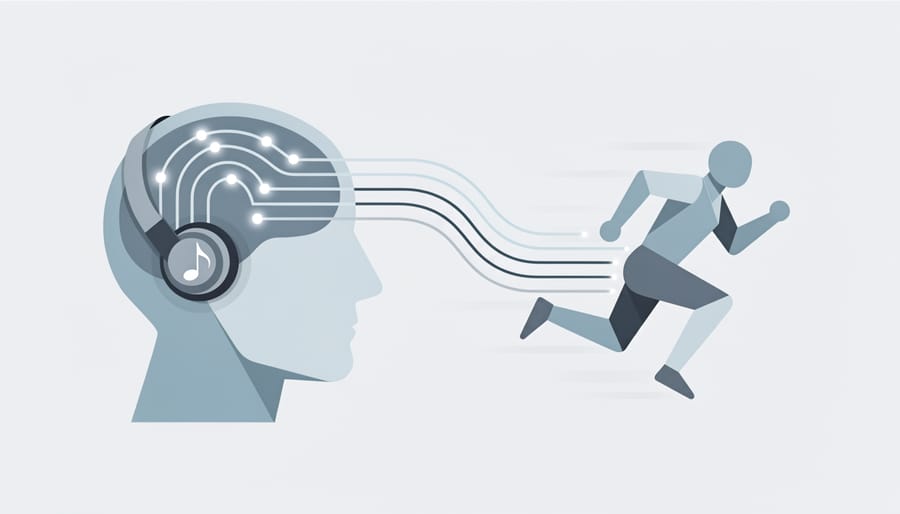
The human brain possesses a remarkable capacity to entrain movement patterns to rhythmic auditory cues, a phenomenon that athletes and fitness enthusiasts have intuitively exploited for decades. Research demonstrates that synchronous auditory stimuli improve performance by aligning motor cortex activity with the temporal structure of music. This neural synchronization creates what researchers call “auditory-motor coupling,” where the brain’s pre-motor regions anticipate and prepare movements in accordance with predictable beats.
For runners, this coupling translates into measurable improvements. Studies have shown that matching stride frequency to a consistent musical tempo reduces metabolic cost by up to 7%, essentially allowing athletes to maintain pace while conserving energy. Cyclists experience similar benefits when pedaling cadence aligns with beat patterns. The mechanism appears deceptively simple: music provides an external timekeeper that reduces the cognitive load of self-regulation.
Breathing patterns also synchronize to musical rhythm, particularly during endurance activities. Historically, military marching songs served this exact purpose, helping soldiers maintain sustainable breathing rates over long distances. Modern applications extend beyond simple tempo matching. Variable rhythm structures can actually train athletes to adapt their stride length and frequency, improving biomechanical efficiency. Distance swimmers who train with underwater metronomes develop more consistent stroke rates, reducing drag and improving oxygen utilization.
This synchronization isn’t merely psychological. Neuroimaging reveals that rhythmic music activates the cerebellum and basal ganglia, structures governing automated movement patterns, effectively offloading some regulatory work from conscious control systems.
The Dopamine Connection: Music as Performance Enhancer
When athletes describe the surge they feel dropping into a high-intensity workout with the right track pulsing through their headphones, they’re experiencing a measurable neurochemical event. Research confirms that music releases dopamine the same neurotransmitter associated with reward-seeking behaviors and pleasure. This biochemical response transforms music from mere background noise into a performance-enhancing tool.
The relationship between sports and music operates through multiple neural pathways. Dopamine release creates a positive feedback loop: pleasurable music triggers neurochemical rewards, which in turn motivates sustained physical effort. This connection helps explain why runners often report feeling less fatigued when exercising with music compared to silence.
Studies measuring perceived exertion during physical activity consistently show that music can reduce how hard athletes feel they’re working, even when physiological markers like heart rate remain constant. The brain essentially diverts attentional resources toward processing musical stimuli, leaving less bandwidth for processing discomfort signals from fatigued muscles.
Historically, this phenomenon wasn’t understood in neurochemical terms, but it was intuitively grasped. Military marches synchronized troops while masking exhaustion during long campaigns. Work songs across cultures served similar functions, making grueling labor more bearable through rhythmic coordination and emotional engagement.
The practical implications are significant. Strategic music selection before and during training can optimize dopamine-mediated motivation, potentially improving workout adherence and performance outcomes. This isn’t about distraction alone but about actively recruiting the brain’s reward circuitry to support athletic goals.
Historical Perspectives: When Cultures Merged Sound and Sport
Military Marches and Physical Conditioning
The connection between military marches and physical training stretches back centuries, revealing how rhythmic music fundamentally shaped our understanding of structured exercise. European military forces in the 18th and 19th centuries discovered that marching to specific tempos ranging from 60 to 120 beats per minute synchronized soldiers’ movements while reducing perceived exertion during long campaigns. This wasn’t merely aesthetic. The cadence helped regulate breathing patterns and created psychological cohesion among troops covering distances of 15-20 miles daily.
Prussian military reformers pioneered systematic calisthenics programs accompanied by martial music, establishing a template that civilian gymnastic movements adopted throughout the 1800s. The Swedish gymnastics system, developed by Pehr Henrik Ling, incorporated similar principles of rhythmic coordination. By the early 20th century, these military-inspired protocols had migrated into school physical education programs across North America and Europe.
The legacy persists in contemporary fitness culture, though we rarely acknowledge its martial origins. Group exercise classes utilize tempo-driven music at 120-140 BPM to sustain cardiovascular effort, mirroring military drill patterns. Running cadences maintain 180 steps per minute, a standard derived from infantry training manuals. Even high-intensity interval training borrows from military physical readiness tests that combined timed exercises with recovery periods.
This historical trajectory reveals how sports and music intertwined through institutional power structures before becoming democratized leisure activities. What began as tools for building combat-ready bodies eventually transformed into methods for personal health, stripped of their original coercive context yet retaining the fundamental principle that synchronized sound enhances physical performance.
The Aerobics Revolution and the Soundtrack of Fitness
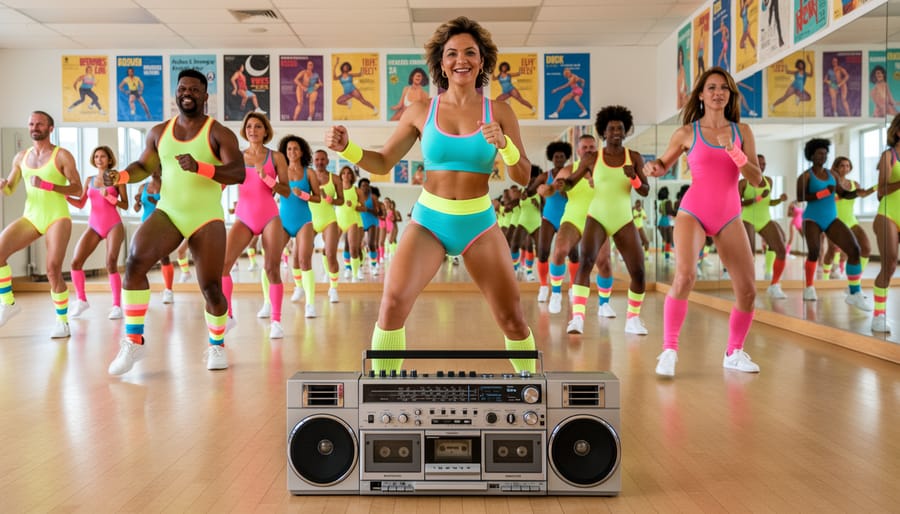
The 1980s witnessed an unprecedented fusion of sports and music through the aerobics phenomenon, fundamentally transforming how Western societies approached physical activity. What began as a niche exercise method championed by fitness instructor Judi Sheppard Missett’s Jazzercise program in the 1970s exploded into a cultural movement that made music an indispensable component of mainstream fitness culture.
Jane Fonda’s 1982 workout video stands as a pivotal moment in this revolution. Selling over 17 million copies, it introduced millions to the concept of exercising to carefully curated musical beats. The video’s success wasn’t merely about exercise routines; it demonstrated how synchronized music could sustain motivation and structure physical exertion. This represented a departure from traditional gym culture, where music served as background ambiance rather than an integral training tool.
The aerobics movement transcended simple exercise trends by creating new social spaces where class, gender, and body image intersected. Aerobics studios became sites of community building, particularly for women seeking alternatives to male-dominated weight rooms. The music selection reflected this demographic shift: pop hits from artists like Olivia Newton-John and Laura Branigan dominated studio playlists, offering an accessible entry point to fitness for those intimidated by conventional gym environments.
Record labels recognized this emerging market, releasing compilation albums specifically designed for aerobics classes. Hooked on Aerobics and similar albums engineered extended dance mixes with consistent beats per minute, demonstrating how the fitness industry could drive music production and consumption patterns.
This era established enduring principles that continue shaping contemporary fitness culture. The expectation that group exercise classes require energizing music, the understanding that tempo influences workout intensity, and the practice of coordinating movement to musical rhythm all trace their mainstream adoption to the 1980s aerobics revolution. These innovations permanently altered the relationship between sports and music in recreational physical activity.
Music as a Social Catalyst in Sports Culture
Stadium Anthems and Collective Identity
Stadium anthems possess remarkable power to unite thousands of strangers under a single emotional banner. When Liverpool fans belt out “You’ll Never Walk Alone” or AC Milan supporters chant their club hymn, individual identities momentarily dissolve into collective experience. These musical rituals create what sociologists call communitas, a temporary erasure of social hierarchies where corporate executives stand shoulder-to-shoulder with factory workers, all equally invested in their team’s fate.
The phenomenon extends beyond mere entertainment. Research shows these synchronized musical expressions trigger neurological responses similar to those found in religious ceremonies and political rallies. Singing together releases oxytocin, the bonding hormone, while coordinated movement and vocalization activate mirror neurons that promote group cohesion. Fans literally become physiologically synchronized through sound.
Historical analysis reveals how sports anthems often emerge from working-class communities, reflecting struggles and aspirations that transcend the game itself. West Ham United’s “I’m Forever Blowing Bubbles” originated from early 20th-century music halls, embodying hopes that persist despite disappointment. These songs carry cultural memory across generations, becoming inheritance passed from parent to child.
The intersection of sports and music in stadium settings also exposes complex dynamics of race, class, and regional identity. African American spirituals influenced many American college fight songs, though this contribution remains underacknowledged. Meanwhile, European ultra groups developed elaborate choreographed displays combining percussion, chanting, and visual spectacle that transform matches into participatory theater.
These shared soundscapes create belonging that extends far beyond the final whistle, building communities that endure across distance and time.

Hip-Hop, Gender, and the Gym Floor
The intersection of sports and music reveals fascinating patterns in how gender expectations shape fitness environments. Walk into most commercial gyms during peak hours and you’ll notice something striking: the playlists often skew heavily toward hip-hop and electronic dance music, genres that carry specific cultural associations and masculine coding within North American fitness culture.
Research from the late 2000s demonstrated that men overwhelmingly preferred hip-hop during weightlifting sessions, while women more frequently selected pop music for cardio workouts. But these preferences don’t exist in a vacuum. They reflect broader social conditioning about what constitutes “appropriate” soundtrack choices for different bodies engaging in different activities. Hip-hop’s association with strength, power, and aggression aligns with traditional masculine ideals that dominate weight room culture.
The gender politics become more complex when we examine group fitness classes. Zumba sessions typically feature Latin pop and reggaeton, while spin classes lean toward high-energy rock and electronic beats. These musical choices aren’t merely aesthetic. They signal who belongs in each space and reinforce cultural scripts about femininity and masculinity through sports participation.
Historical perspective matters here. The 1980s aerobics boom paired upbeat pop music with predominantly female participants, cementing associations between certain genres and gendered exercise forms that persist decades later. Hip-hop’s emergence in fitness spaces during the 1990s coincided with the rise of “hardcore” gym culture, further encoding these genre preferences along gender lines.
Yet challenges to these norms are emerging. Younger fitness enthusiasts increasingly reject strict genre boundaries, mixing playlists that defy conventional expectations about what music should accompany which activities or bodies.
Practical Applications: Optimizing Music for Different Athletic Pursuits
Tempo Matching: Finding Your Performance Sweet Spot
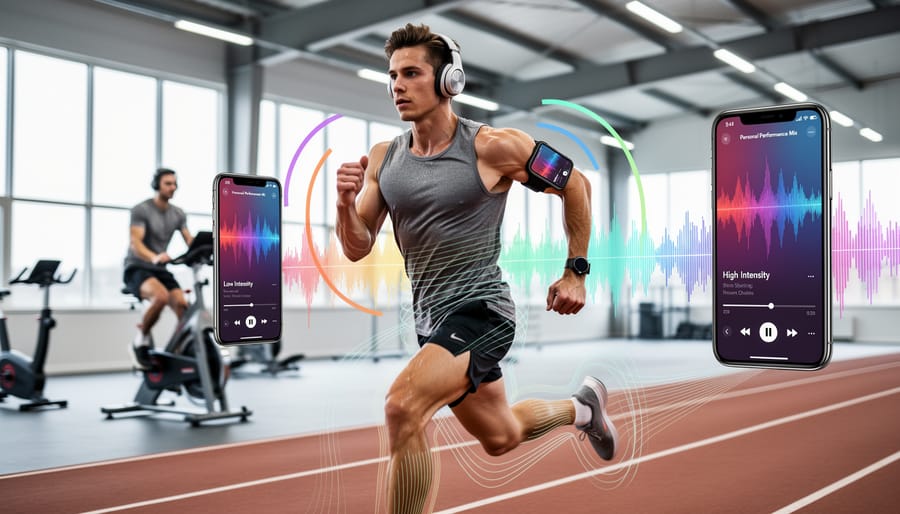
The relationship between music tempo and physical performance has fascinated researchers since the 1911 work of Leonard Ayres, who discovered that cyclists pedaled faster when military bands played nearby. Modern sports science has refined this observation into practical metrics: beats per minute, or BPM, directly influences exercise cadence and perceived exertion.
For low-intensity activities like walking or stretching, music between 115-120 BPM creates a comfortable rhythm that encourages consistent movement without overwhelming the nervous system. Think of classic soul tracks or downtempo hip-hop. As intensity increases to moderate aerobic exercise, the sweet spot shifts to 120-140 BPM, mirroring the natural cadence of jogging or cycling at conversational pace. This range includes much of pop music from the 1970s onward, a historical alignment that helps explain the genre’s dominance in fitness contexts.
High-intensity interval training demands faster tempos. Research from Brunel University’s Karageorghis Lab shows that songs between 140-180 BPM synchronize with vigorous movement patterns, reducing perceived effort by up to 12%. The synchronization effect works because our motor cortex naturally entrains to external rhythms, making properly matched music feel like a metronome for muscles.
The principle extends beyond cardio. Strength training benefits from deliberate tempo matching: slower tempos (90-110 BPM) during heavy compound lifts help maintain controlled form, while faster beats (130-150 BPM) energize explosive movements like box jumps or kettlebell swings.
Personal preference matters too. Cultural background influences which rhythmic patterns feel most natural. A 2018 study examining diverse populations found that participants performed best when music aligned with both physiological demands and culturally familiar rhythmic structures. The optimal BPM isn’t universal; it’s the intersection of biomechanics, musical tradition, and individual experience.
Beyond Motivation: Music for Recovery and Cooldown
While athletes and fitness enthusiasts have long recognized music’s power to energize workouts, its role in recovery remains surprisingly underexplored. The physiological shift from exertion to rest requires more than passive silence. Strategic use of music during cooldown periods can actively facilitate the body’s transition from sympathetic to parasympathetic nervous system dominance, promoting muscle relaxation and metabolic recovery.
Research published in the Journal of Sports Medicine demonstrates that slow-tempo music (60-80 beats per minute) played during post-exercise periods significantly reduces cortisol levels and heart rate variability compared to silence or continued high-tempo tracks. This isn’t merely about creating a pleasant atmosphere. The auditory stimulus appears to modulate the autonomic nervous system, helping athletes downregulate more efficiently after intense physical stress.
Historically, this understanding has roots in practices beyond Western sports culture. Traditional Chinese medicine has long incorporated specific musical modes during recuperative practices, while yogic traditions in South Asia pair particular ragas with restorative postures. These cross-cultural approaches suggest an intuitive grasp of what contemporary exercise physiology is only now quantifying.
The practical implications extend beyond elite athletes. Anyone engaging in moderate to vigorous physical activity can benefit from deliberately curated cooldown playlists. Classical compositions, ambient soundscapes, or even nature sounds have shown promise in accelerating lactate clearance and reducing perceived muscle soreness in controlled studies.
Yet accessibility remains uneven. Commercial fitness spaces typically emphasize high-energy playlists throughout entire sessions, potentially undermining recovery processes. Understanding music as a recovery tool, not just a motivational device, requires rethinking how we structure the complete exercise experience from warm-up through final stretches.
The Dark Side of the Playlist: When Music Becomes Distraction
While music offers undeniable performance benefits, the relationship between sports and music carries risks that deserve attention from athletes and coaches alike. A growing body of research suggests that chronic reliance on external auditory stimulation during training may undermine the development of interoceptive awareness, the ability to perceive internal bodily signals that guide pacing, fatigue recognition, and injury prevention.
Studies from sports psychology reveal a concerning pattern. Athletes who consistently train with music sometimes struggle to interpret physical feedback during competition when headphones aren’t available. This dependency mirrors historical concerns raised in the 1980s when Walkman devices first appeared in gyms. Physiologists noted that runners using portable music players showed reduced sensitivity to early-stage muscle fatigue, potentially increasing injury risk during long-distance events.
The neurological explanation centers on attentional capacity. Human cognitive resources are finite. When music occupies significant mental bandwidth, particularly high-tempo or lyrically complex tracks, less attention remains available for proprioceptive monitoring. Research from the Journal of Sports Sciences found that cyclists listening to preferred music demonstrated 10% lower accuracy in rating perceived exertion compared to silent conditions.
Cross-cultural analysis adds another dimension. Traditional athletic practices in many Indigenous cultures emphasized silence and breath awareness during physical training, philosophies that contrast sharply with contemporary Western gym culture’s reliance on constant sonic stimulation.
The overstimulation concern extends beyond individual performance. Some exercise psychologists argue that music-saturated training environments may contribute to broader societal patterns of digital dependency, where silence becomes uncomfortable rather than restorative. Finding balance requires intentionality: strategic music use for specific training goals while preserving space for unmediated physical experience.
The intersection of sports and music reveals far more than a simple performance-enhancing tool. Throughout history, these two cultural forces have shaped one another, reflecting broader patterns of human expression, identity, and social organization. From the war drums that synchronized ancient armies to the carefully curated playlists that accompany modern marathons, rhythm and movement have remained inseparable.
Scientific research confirms what athletes have instinctively understood: music modulates effort perception, enhances coordination, and triggers neurochemical responses that optimize physical performance. Yet reducing this relationship to mere physiology ignores the cultural weight music carries into athletic spaces. The soundtracks we choose for workouts communicate values, reinforce group identities, and sometimes perpetuate inequalities rooted in race, class, and gender.
For those seeking to harness music’s potential in personal fitness, experimentation offers valuable insights. Try varying tempo during different workout phases. Notice how certain genres shift your mental state or alter your movement quality. But remain curious about why particular sounds feel motivating. Whose voices dominate your playlists? What cultural traditions inform these musical choices?
Understanding sports and music through multiple lenses produces richer knowledge than any single discipline can provide. This cross-disciplinary perspective acknowledges both the measurable physiological benefits and the complex sociocultural meanings embedded in athletic soundscapes. Thoughtful engagement with this relationship enhances not just individual performance but also awareness of how culture shapes even our most physical experiences.