
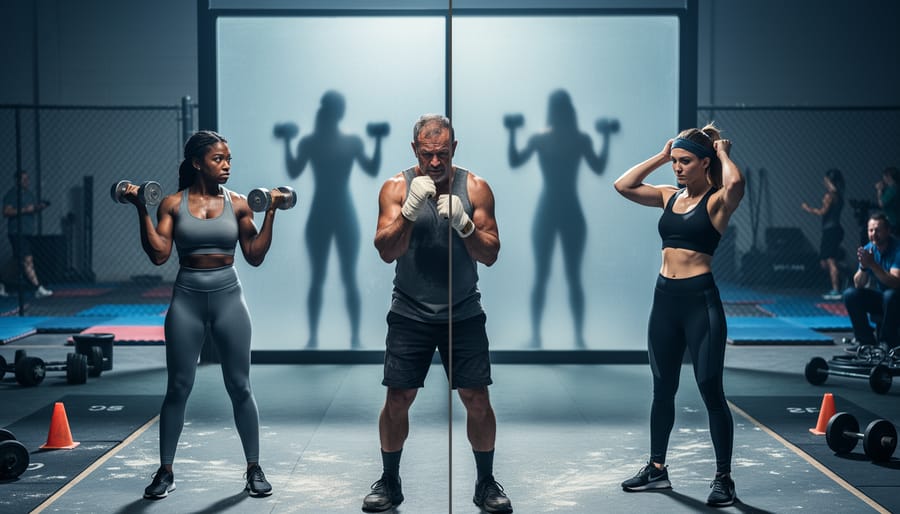
Physical culture and sport have never existed in a social vacuum. From the segregated gymnasiums of the Victorian era to the pay-walled boutique fitness studios of 2026, the pursuit of physical development consistently mirrors and magnifies the fault lines of inequality that structure society. The bodies we build, the sports we play, and the physical spaces we access are shaped by class privilege, racial hierarchies, gender norms, and other intersecting systems of power that determine who gets to move, how, and where.
Understanding this relationship requires looking beyond the inspirational narratives that dominate fitness media. While sport is often celebrated as a meritocratic arena where talent triumphs over circumstance, historical evidence tells a different story. The eighteenth-century gentleman boxer trained in exclusive clubs while working-class fighters battled for survival money in brutal bare-knuckle matches. Women were systematically excluded from competitive athletics under pseudoscientific claims about reproductive health. Black athletes achieved excellence despite deliberate architectural barriers designed to keep them from pools, tracks, and playing fields.
These divisions persist today in subtler but equally consequential forms. Economic barriers shape access to youth sports programs, quality coaching, and nutritious food. Cultural stereotypes still channel different bodies toward different physical pursuits. Meanwhile, the fitness industry markets transformation narratives that obscure how structural inequalities limit who can afford personal trainers, gym memberships, or simply the time to exercise.
Yet physical culture has also provided terrain for resistance. Athletes have challenged racist exclusions, feminists have reclaimed strength training, and community-based fitness movements have created alternatives to commodified wellness. By examining how sport both reflects and reshapes social divisions, we gain tools to build more equitable physical cultures.
The Historical Foundations: When Fitness Became a Marker of Worth
The Gentleman Athlete and Working-Class Bodies
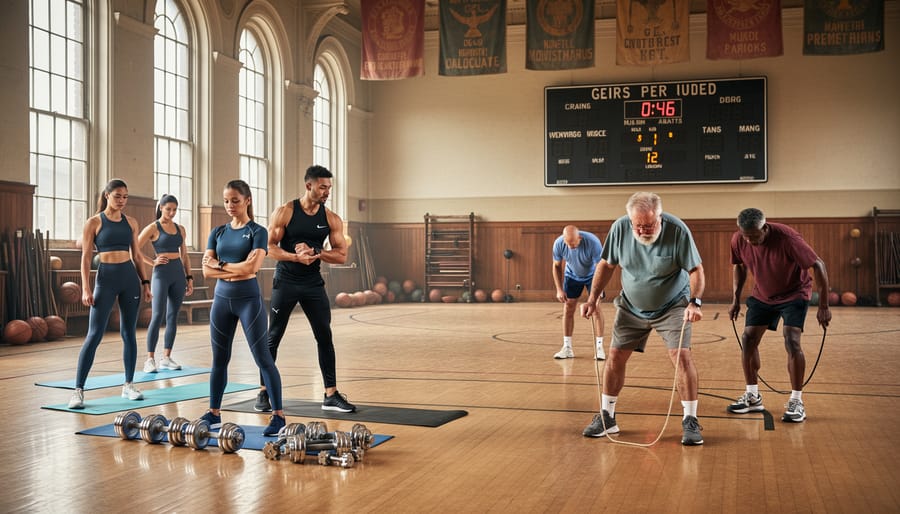
The late Victorian cult of amateurism created a rigid boundary that elevated leisured athletic pursuits while dismissing the physical exertion of laborers as mere toil. Upper-class men who could afford to train without payment became “gentleman athletes,” their bodies shaped through cricket, rowing, and lawn sports that required land, equipment, and free time. This wasn’t just about access. Amateur codes explicitly banned working-class competitors who earned money through physical activity, branding them as tainted by commerce.
Meanwhile, factory workers and miners performed grueling physical labor that built considerable strength and endurance. Yet this exertion carried no cultural prestige. Victorian social reformers and physical culturists rarely framed industrial work as cultivating fitness. Instead, they portrayed working-class bodies as degraded by mechanized toil, hunched and weakened by repetitive tasks rather than developed through deliberate training.
This ideological split served class interests. By distinguishing “rational recreation” from paid physical work, elites positioned their own bodily practices as morally superior expressions of character development. Working men who tried to compete in organized sport faced accusations of professionalism if they accepted prize money to offset lost wages. The gentleman amateur’s body became a symbol of refinement and self-mastery, while laboring bodies remained locked outside the gates of respectable athleticism, their physical capital unrecognized and devalued regardless of actual capability.
Racialized Bodies and Colonial Physical Culture
Colonial powers wielded physical culture as an instrument of racial ideology, constructing hierarchies that positioned European bodies as the pinnacle of human development while framing colonized peoples as physically inferior or, conversely, as mere brute strength requiring civilizing discipline. British imperial educators, for instance, promoted cricket and rugby in colonies not merely as sport but as moral training systems designed to instill obedience and “proper” masculine virtues modeled on English public school ideals. The subtext was clear: physical refinement and controlled athleticism belonged to the colonizers, while indigenous physical practices were dismissed as primitive or chaotic.
This framework conveniently justified domination. French colonial administrators in West Africa measured skull sizes and body proportions to produce pseudoscientific typologies linking physique to intellectual capacity and supposed readiness for self-governance. German colonial authorities in Southwest Africa similarly used anthropometric studies to categorize indigenous populations, treating bodies as evidence for racial theories that legitimized exploitation and violence. Physical culture became entangled with eugenic thought, where “civilized” exercise regimens were portrayed as refining superior European stock while colonial subjects required external control to channel their physicality productively.
Yet colonized communities resisted these narratives. Indian wrestlers maintained traditional akhara training systems that asserted cultural pride and physical prowess outside colonial frameworks. Caribbean cricketers eventually turned the colonizer’s game into a site of anti-colonial assertion, demonstrating excellence that undermined racial hierarchies. African boxers in the early twentieth century challenged white supremacist claims about natural physical superiority through victories that colonial authorities found deeply threatening. These acts of resistance revealed how physical culture could serve liberation as readily as oppression, though the structural inequalities forged during colonialism persist in contemporary sport and fitness spaces.
Gender and the Contested Terrain of Physical Empowerment
The ‘Fragile Female’ Myth and Early Resistance
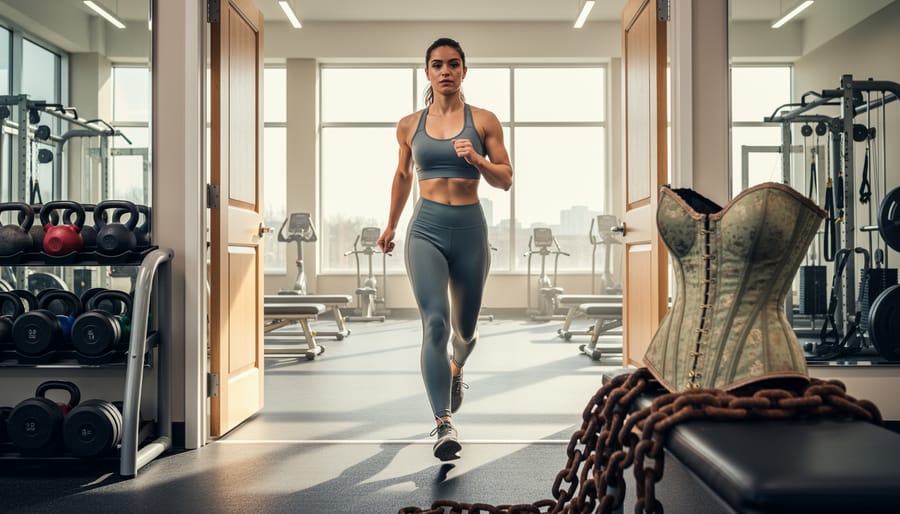
The Victorian era enshrined the doctrine of female frailty into medical orthodoxy, claiming vigorous physical activity would damage women’s reproductive systems and divert vital energy from their uteruses to their muscles. Physicians warned that running, jumping, or weightlifting could cause a woman’s womb to dislodge, render her infertile, or trigger hysteria. This biological determinism served a convenient social function: confining middle-class women to domestic spheres while positioning their delicate bodies as requiring male protection and control.
Dress codes reinforced physical constraint. Corsets restricted breathing and movement, while layered petticoats made even walking an encumbrance. Schools excluded girls from physical education programs available to boys, or limited them to gentle calisthenics that wouldn’t induce perspiration, which was considered unladylike. The subtext was clear: women’s bodies existed for reproduction and display, not strength or autonomous movement.
Yet resistance emerged alongside these restrictions. In the 1880s and 1890s, physical culturists like Genevieve Stebbins adapted Delsarte movement principles to argue that women needed muscular development for health and grace. Catherine Beecher’s gymnastics programs, though still framed around domestic preparation, introduced thousands of American women to systematic exercise. The bicycle craze of the 1890s proved revolutionary: cycling required practical clothing, built leg strength, and offered women unprecedented mobility and independence, prompting Susan B. Anthony to declare it had done more for women’s emancipation than anything else.
These early challenges laid groundwork for broader feminist reclamation of physical autonomy, demonstrating that the fragile female was an ideology, not a biological fact.
Modern Manifestations: Body Image and Access
Contemporary fitness culture perpetuates gendered body ideals through remarkably specific and divergent pathways. Women remain targeted with messaging centered on weight loss, “toning,” and aesthetic refinement, euphemisms that avoid acknowledging muscle building while emphasizing bodily control. Men receive encouragement toward hypertrophy and strength, with “bulking” and “gains” framing physical development as enhancement rather than reduction. This linguistic split reflects deeper assumptions about which bodies deserve to occupy space and which should minimize themselves.
The spatial organization of fitness environments reinforces these divisions. Many gyms segregate equipment by implicit gender norms: free weights occupy male-dominated zones while cardio areas and group fitness studios skew female. Women who venture into strength training sections frequently report harassment, unsolicited advice, or dismissive treatment from male patrons and staff. Some facilities have responded by creating women-only spaces, which address safety concerns but can inadvertently validate the premise that women don’t belong in “serious” training areas.
Marketing imagery compounds these messages. Brands selling products to women emphasize flexibility, grace, and lean physiques, often through pastel palettes and soft lighting. Men’s fitness advertising showcases bulk, power, and aggression with stark contrasts and dynamic poses. Even when companies attempt inclusive campaigns, they typically showcase conventionally attractive bodies that reinforce narrow beauty standards rather than genuine diversity in size, ability, or presentation.
These patterns create psychological barriers as potent as physical ones. Research demonstrates that women internalize fitness spaces as unwelcoming and judge their own legitimacy based on conformity to gendered appearance norms, limiting their participation before they ever enter a gym.
Class Barriers in Contemporary Fitness Culture
The Boutique Fitness Economy and Exclusion
The boutique fitness phenomenon has transformed exercise from a basic health practice into a luxury commodity. Studios charging $35-45 per class position themselves not merely as workout venues but as lifestyle brands offering curated experiences complete with designer workout gear, post-class smoothies, and Instagram-worthy interiors. This pricing structure, equivalent to several hours of minimum-wage work for a single session, immediately excludes substantial portions of the population.
These spaces cultivate exclusivity through cultural codes as much as price tags. The unspoken expectations around appropriate attire, familiarity with trendy modalities like barre or reformer Pilates, and the social rituals of chatting with instructors create barriers beyond economics. A working-class person who saves to attend such a class may find the cultural fluency required just as alienating as the cost.
The proliferation of ClassPass and membership models requiring upfront monthly commitments further entrenches inequality. While marketed as democratizing access, these platforms still price out households living paycheck to paycheck or those with irregular incomes. The result is a two-tiered fitness landscape: aesthetically refined studios for the affluent and aging, under-resourced community centers or big-box gyms for everyone else.
This stratification does more than limit access. It positions certain bodies and exercise practices as aspirational while stigmatizing budget alternatives, reinforcing the notion that true physical cultivation requires financial investment rather than simply movement itself.
Urban Planning and the Right to Movement
The geography of physical activity is never neutral. In affluent neighborhoods, residents navigate tree-lined streets with wide sidewalks, protected bike lanes, and well-maintained parks within a five-minute walk. Meanwhile, low-income communities often lack basic pedestrian infrastructure: cracked sidewalks abruptly end mid-block, forcing walkers into traffic, and the nearest green space may require crossing dangerous intersections or highways that fragment the neighborhood.
This spatial inequality reflects decades of planning decisions that treated movement as a luxury rather than a right. When cities invested in highway construction through the mid-20th century, they deliberately routed interstates through Black and poor neighborhoods, destroying existing parks and creating barriers that persist today. The result is measurable: residents of low-income areas walk or bike for transportation at higher rates than their wealthier counterparts, yet face four times the pedestrian fatality risk.
Park access compounds these disparities. A 2021 Trust for Public Land analysis found that communities of color have 44% less park space per capita than predominantly white neighborhoods. Where parks do exist in lower-income areas, they’re frequently undersized, poorly maintained, and lack basic amenities like lighting or water fountains. The absence of safe, functional public space effectively privatizes physical culture, pushing movement behind the paywalls of gyms or into the driveways of suburban homes.
Safety concerns further restrict who can move freely. Women and LGBTQ+ individuals in all neighborhoods face harassment while jogging or cycling, but this threat intensifies in areas with high crime rates and inadequate street lighting. The right to move one’s body through public space remains unevenly distributed, shaped by zip code as much as by individual choice.
Race and the Politics of Athletic Space
From Segregated Leagues to Persistent Barriers
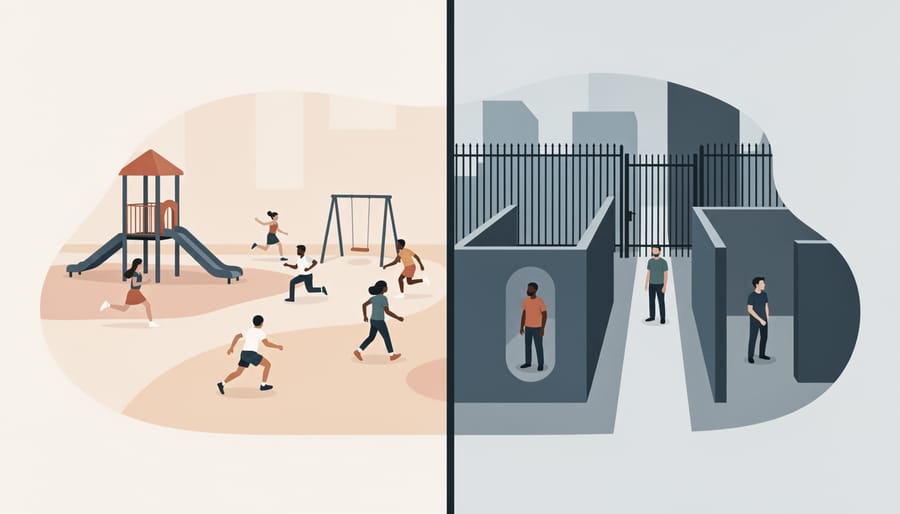
The history of racial segregation in organized sport reveals a pattern that extends far beyond formal exclusion. While the color barrier in Major League Baseball famously fell in 1947 with Jackie Robinson, similar walls existed across nearly every major American sport. The Negro Leagues, founded out of necessity in 1920, weren’t simply parallel institutions, they were evidence of systemic denial of opportunity based on race.
Integration, when it finally arrived, came unevenly and incompletely. Black athletes faced quotas limiting their numbers on teams, positional stacking that assigned them to roles deemed suitable for their supposed physical attributes rather than leadership qualities, and persistent questions about their intelligence and temperament. Track and field integrated faster than golf or tennis, revealing how class associations amplified racial barriers in certain sports.
The structural inequalities persisted in more subtle forms. Coaching and management positions remained overwhelmingly white even as player rosters diversified. Youth sports pipelines, dependent on neighborhood resources and informal networks, continued to funnel Black athletes toward basketball and football while steering them away from swimming, hockey, and lacrosse, not through explicit rules but through accumulated disadvantages in access, facilities, and cultural capital.
Today’s landscape shows progress measured against a baseline of total exclusion, not genuine equity. Representation in ownership, front offices, and sports media lags decades behind player diversity, demonstrating how integration of the field didn’t automatically extend to integration of power.
The Myth of Natural Athletic Ability
The notion that certain racial groups possess innate athletic superiority has become so deeply embedded in popular consciousness that it masquerades as scientific fact. When commentators marvel at “natural” Black athleticism or explain the dominance of East African distance runners through genetics alone, they resurrect nineteenth-century racial science in contemporary clothing. This essentialist thinking doesn’t just misrepresent how athletic ability develops, it actively harms athletes by reducing their achievements to biological determinism while obscuring the social, economic, and cultural factors that actually shape sporting excellence.
The myth operates through a selective reading of representation. Black overrepresentation in basketball and sprinting gets attributed to innate fast-twitch muscle fiber, while underrepresentation in swimming gets explained away without examining how pool access, lessons, and cultural encouragement follow class and racial lines. Similarly, Kenyan distance running dominance reflects decades of investment in running infrastructure, cultural valorization of the sport, high-altitude training environments, and economic motivation, factors conveniently ignored when genetic explanations prove more convenient.
This biological reductionism carries dangerous consequences. It suggests that Black athletic success requires less dedication and strategic thinking, feeding into broader stereotypes about intellectual capacity. It discourages white and Asian athletes from certain sports while steering Black youth away from activities deemed unnatural fits. Most insidiously, it presents athletic bodies as instruments divorced from personhood, echoing historical treatment of enslaved people valued for physical labor.
The reality is that athletic ability emerges from complex interactions between opportunity structures, training access, cultural meaning-making, and yes, individual variation, but variation that exists within populations, not between them. When we attribute sporting patterns to race rather than resources, we naturalize inequality itself.
Intersectionality: Where Multiple Divisions Compound
The notion that physical culture operates along single, separate tracks of exclusion, class here, race there, gender somewhere else, fundamentally misrepresents how marginalization actually functions. A working-class Black woman doesn’t experience these categories sequentially, one oppression after another. Instead, they fuse into a distinct reality that can’t be understood by simply adding together separate analyses. This concept of intersectionality, developed by legal scholar Kimberlé Crenshaw, reveals how identity categories create overlapping systems of discrimination and privilege that profoundly shape access to and experiences within physical culture.
Consider the Latina immigrant working multiple minimum-wage jobs. Her class position limits disposable income for gym memberships or specialized equipment. Language barriers may prevent her from understanding fitness instructions or advocating for herself in athletic spaces. Gender expectations within her cultural context might discourage visible athleticism or time spent away from family care responsibilities. Immigration status could create fear of public spaces where she might exercise. These aren’t separate obstacles she encounters in sequence, they form an interlocking web that makes mainstream fitness culture simultaneously inaccessible financially, linguistically, culturally, and practically.
The Black disabled woman faces particular marginalization that neither disability advocacy nor racial justice movements fully address when they operate independently. Adaptive sports programs often center white participants and fail to account for racial health disparities that affect disability rates. Meanwhile, Black-focused fitness spaces frequently lack wheelchair accessibility or knowledge about adaptive modifications. Her experience sits in the gap between these single-issue approaches, invisible to both.
Gender nonconforming youth from religious communities face compounded vulnerability in school physical education. Their gender expression may violate both institutional dress codes and family expectations, while their religious background might conflict with LGBTQ+-affirming spaces. Locker rooms become sites of particular anxiety where multiple forms of surveillance and potential violence converge. These young people can’t simply choose to navigate “just” gender issues or “just” religious ones, both operate simultaneously.
The compounding effect extends beyond exclusion to shape resistance strategies. Working-class women of color have historically created their own physical culture practices precisely because mainstream fitness spaces failed to address their intersectional needs. Caribbean dance fitness, double-dutch traditions, church-based step teams, these practices emerged not from a single axis of marginalization but from the creative responses of multiply-marginalized communities building alternatives.
Sites of Resistance and Transformation
Despite systemic barriers, marginalized communities have consistently refused to accept exclusion from physical culture. Instead, they’ve built their own spaces, practices, and organizations that challenge dominant norms while meeting their specific needs. These alternative physical cultures represent more than accommodation, they’re sites of active resistance that redefine what fitness and sport can mean.
Women-only gyms emerged not from separatism but from necessity. Tired of objectification, equipment monopolization, and intimidation in mixed-gender facilities, women created spaces where they could lift heavy, sweat freely, and develop strength without male surveillance. Curves franchises peaked at over 10,000 locations worldwide by addressing women’s desire for supportive, non-intimidating environments. More recently, feminist weightlifting communities have reclaimed the barbell from masculine gatekeeping, celebrating functional strength over aesthetic thinness and fostering mentorship networks that counter broader fitness culture’s individualism.
LGBTQ+ sports leagues transformed athletic participation for communities historically excluded or endangered in mainstream sport. The first gay softball leagues appeared in the 1970s when being openly queer in conventional teams risked violence or expulsion. Today, the Gay Games attracts thousands of athletes across dozens of sports, creating competitive opportunities without the homophobia and transphobia that pervade elite athletics. These aren’t just “safe spaces”, they’re environments where queer athletes compete fiercely while celebrating identities that dominant sport culture demands they hide.
Adaptive athletics has revolutionized possibilities for disabled athletes, moving from rehabilitation frameworks to genuine competitive sport. Wheelchair basketball, Paralympic competitions, and adaptive climbing communities demonstrate that disability doesn’t preclude athletic excellence, ableist infrastructure and attitudes do. Organizations like Adaptive Adventures and Challenged Athletes Foundation have created pathways for disabled people to access activities from which they were systematically excluded, while disabled athletes increasingly reject inspiration porn narratives to claim space as competitors, not objects of admiration.
Communities of color have likewise built autonomous physical cultures. Black yoga practitioners have created decolonized spaces that honor the practice’s roots while addressing how predominantly white studios can feel unwelcoming. Indigenous games movements revive traditional sports that colonialism attempted to erase, reconnecting communities with cultural practices that predate European athletic models. Boxing gyms in working-class neighborhoods of color continue functioning as community anchors that provide structure, mentorship, and outlets for young people navigating systemic disadvantage.
These alternative spaces don’t just provide access, they fundamentally reimagine what physical culture can be, centering community over competition, transformation over perfection, and belonging over exclusion.
Moving Toward Equitable Physical Culture
Creating a more equitable physical culture requires coordinated action across multiple levels of society, moving beyond well-intentioned statements toward structural change. The barriers documented throughout this article, economic, racial, gendered, and intersectional, demand responses that are equally multifaceted and willing to challenge entrenched power dynamics within fitness and sport institutions.
Policy interventions provide the scaffolding for systemic change. Municipal governments can mandate that new residential developments include accessible recreational facilities rather than treating them as luxury amenities. Schools can implement physical education curricula that expose students to diverse movement practices beyond competitive team sports, validating activities from dance to martial arts to outdoor recreation. At the national level, healthcare systems that subsidize gym memberships or fitness programs as preventive medicine could extend access, though such policies must avoid paternalistic surveillance of how people use their bodies.
Grassroots organizing has historically driven the most transformative shifts in physical culture. Community groups that convert vacant lots into basketball courts or establish sliding-scale yoga studios actively redistribute access to movement. Organizing pressure forced many fitness chains to reconsider discriminatory policies around dress codes that disproportionately affected women of color or LGBTQ+ individuals. These efforts work precisely because they emerge from affected communities rather than being imposed from above.
Concrete approaches that various stakeholders can implement include:
- Individuals can interrogate their own biases about which bodies belong in which spaces and actively welcome newcomers rather than policing gym culture through judgment or unwanted advice.
- Fitness organizations can establish transparent pay scales for instructors, hire diverse staff who reflect the communities they serve, and offer genuinely free or low-cost programming rather than superficial discount schemes.
- Sports governing bodies can fund pathways for athletes from underrepresented backgrounds, audit their own policies for exclusionary effects, and compensate athletes equitably regardless of gender or event prestige.
- Urban planners can prioritize walkable neighborhoods, protected bike lanes, and well-maintained public parks in working-class areas with the same commitment shown to affluent districts.
- Media outlets can showcase diverse athletic bodies and movement practices without framing them as inspirational curiosities, normalizing varied approaches to physical culture.
Yet structural changes alone will not dismantle the cultural narratives that equate physical fitness with moral worth or that valorize certain body types as inherently superior. Rethinking these narratives means divorcing movement from weight loss as the default goal, recognizing rest as valuable rather than lazy, and celebrating what bodies can do rather than how they appear. It requires acknowledging that someone who never enters a gym but walks to work, plays with their children, or gardens actively participates in physical culture just as legitimately as the marathon runner.
The most promising transformations emerge when multiple strategies reinforce each other: policy changes create space for grassroots experiments, which in turn shift cultural narratives that make further policy reforms imaginable. This iterative process has no endpoint, because social divisions continually adapt and reconstitute themselves. Equitable physical culture is not a destination to reach but an ongoing practice of dismantling barriers and expanding who gets to move, play, and define what counts as physical achievement.
Physical culture has never existed in a vacuum separate from the social hierarchies that structure our lives. Throughout this exploration, we’ve seen how the gymnasium, the playing field, and the running trail function simultaneously as spaces of liberation and exclusion. The same fitness practices that empower some bodies systematically marginalize others through barriers of cost, geography, cultural coding, and representation.
Understanding these dynamics matters profoundly for anyone who participates in sport or fitness, whether as an athlete, instructor, researcher, or casual practitioner. When we recognize how class shapes access to boutique studios, how racial stereotypes limit athletic identity, how gender norms police movement, we can begin to see our own complicity or exclusion within these systems. This awareness doesn’t diminish the genuine benefits of physical culture. Rather, it enriches our engagement by connecting bodily practices to their social contexts.
The resistance movements documented here demonstrate that change is possible. From adaptive athletics to community-based fitness initiatives to the quiet defiance of bodies that refuse prescribed norms, people continually reshape physical culture toward greater justice. These efforts remind us that while fitness spaces reproduce inequality, they also provide terrain for challenging it. The question facing physical culture today is not whether it reflects social divisions but whether we will actively work to transform those divisions or passively allow their continuation.