
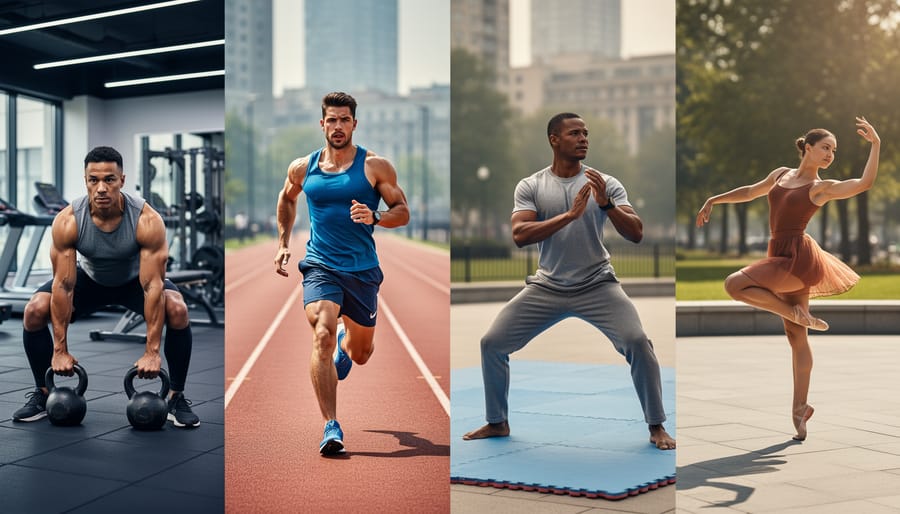
The seven cultures framework is a sociological model that categorizes the diverse ways people engage with fitness and physical activity, revealing how social divisions shape access, participation, and meaning in sport and exercise. Developed to analyze physical culture through the lens of power and inequality, the framework identifies seven distinct cultural formations: competitive sport, health and fitness, outdoor adventure, dance and movement, martial arts and combat sports, mind-body practices, and informal recreational play. Each culture operates with its own values, practices, and social hierarchies.
Understanding these seven cultures matters because participation in physical activity isn’t neutral. Who gets to run, lift, compete, or recover is deeply tied to class, race, and gender along with ability, age, and geography. A CrossFit box in an affluent suburb and a pickup basketball game in an underserved neighborhood both count as physical culture, but they exist within vastly different social and economic contexts. The seven cultures framework gives us language to dissect those differences.
This article explains what each culture encompasses, how the framework functions as an analytical tool, and why it remains relevant for anyone studying or working in fitness, sport sociology, or public health. We’ll examine how these cultures overlap, compete for legitimacy, and reflect broader social inequalities. Whether you’re designing community fitness programs, researching physical education policy, or simply trying to make sense of why certain activities feel accessible while others don’t, the seven cultures framework offers a structured way to see physical activity as more than individual choice. It’s a map of how bodies move through systems of power.
What the 7 Cultures Framework Means
The 7 cultures framework is an analytical model that breaks down the sprawling world of physical activity into seven distinct yet interconnected domains, each with its own social rules, access barriers, and cultural meanings. Rather than treating all movement as equivalent, this framework asks scholars and practitioners to examine how different physical activity spaces function as social institutions that shape who participates, who is excluded, and what values get reinforced through movement practice.
Developed within physical culture studies, the model treats competitive sport, recreational play, school PE, commercial fitness, outdoor pursuits, dance, and therapeutic movement as separate cultures worthy of critical analysis. Each domain operates with specific gatekeepers (coaches, instructors, medical professionals), distinct forms of body cultural identity and particular relationships to social hierarchies around class, race, gender, and ability.
Understanding the framework requires familiarity with several foundational concepts:
- Physical culture
- The entire constellation of practices, institutions, and meanings surrounding human movement, encompassing everything from professional athletics to rehabilitation exercises. It treats bodily activity as inherently social and cultural, not merely biological.
- Social divisions
- The structural inequalities, based on class, race, gender, disability, and other markers, that create unequal access to resources, opportunities, and recognition within physical activity spaces.
- Body capital
- The valued physical attributes and movement skills that function as social currency within particular cultures, determining who belongs and who succeeds. What counts as valuable varies dramatically across domains.
- Embodied practice
- The lived, physical experience of performing and learning movement within specific cultural contexts, where social norms become literally inscribed in posture, gesture, and bodily capacity.
These categories aren’t rigid boxes. A single gym might house elements of competitive sport (powerlifting meets), wellness culture (yoga classes), and therapeutic practice (physical therapy). The framework’s power lies in revealing how each culture privileges certain bodies, movements, and identities while marginalizing others, patterns that persist even when domains overlap or individuals move between them.
How the 7 Cultures Framework Works in Practice
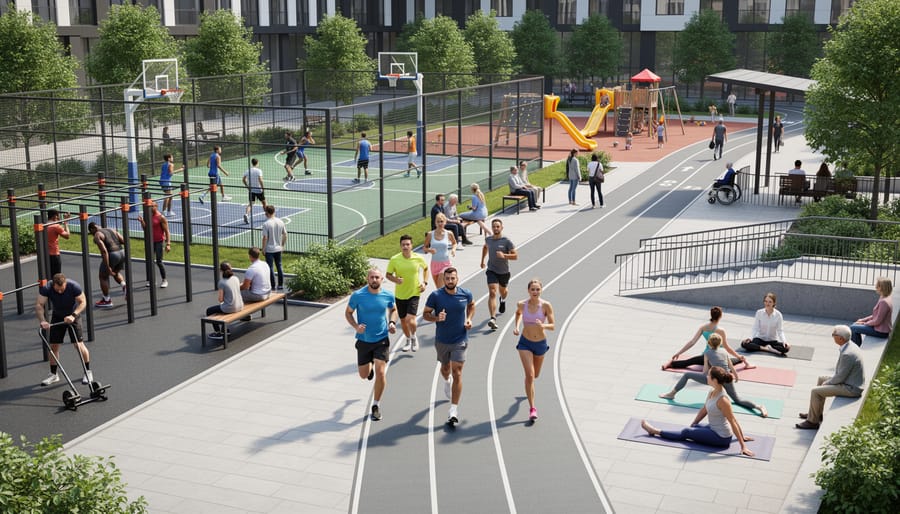
The 7 cultures framework functions as an analytical lens that transforms how we see physical activity, moving from viewing it as a neutral biological practice to recognizing it as a social arena where power, identity, and access intersect. When applied, the framework encourages observers to ask not just “what physical activity is happening?” but “who has access, whose bodies are centered, what cultural capital is required, and whose interests does this space serve?” This shift in questioning immediately surfaces inequities that often hide behind rhetoric of health, meritocracy, or universal participation.
Each culture within this framework operates according to distinct norms that govern everything from acceptable attire and body types to appropriate emotional expression and levels of competitiveness. Elite sport, for instance, demands visible dedication, tolerance for pain, and often requires financial resources for specialized coaching and equipment from an early age. Fitness culture may emphasize aesthetic transformation and personal discipline, while therapeutic movement prioritizes functional restoration within clinical settings. These norms are neither natural nor universal, they reflect historical legacies, economic structures, and social divisions around class, race, gender, and ability.
Access points vary dramatically across cultures. Entering elite sport typically requires identification by coaches or scouts during childhood, along with family resources to support training. Recreational sport may only need a local league and registration fee, but even this assumes free time, transportation, and knowledge of how to join. Fitness culture often gates access through expensive memberships, dress codes, and unwritten rules about who belongs in which spaces. Understanding these barriers helps explain why participation patterns consistently skew along lines of privilege rather than reflecting random individual choice.
People rarely inhabit just one culture throughout their lives. A person might move from physical education as a child, to recreational sport in college, then into fitness culture as an adult, and eventually therapeutic movement after injury. Each transition requires learning new norms, acquiring different forms of knowledge, and navigating shifting social expectations. The framework reveals how these movements between cultures are shaped by life circumstances, resources, and social positioning, not simply personal preference or motivation.
The Seven Distinct Cultures of Physical Activity
Elite Competitive Sport
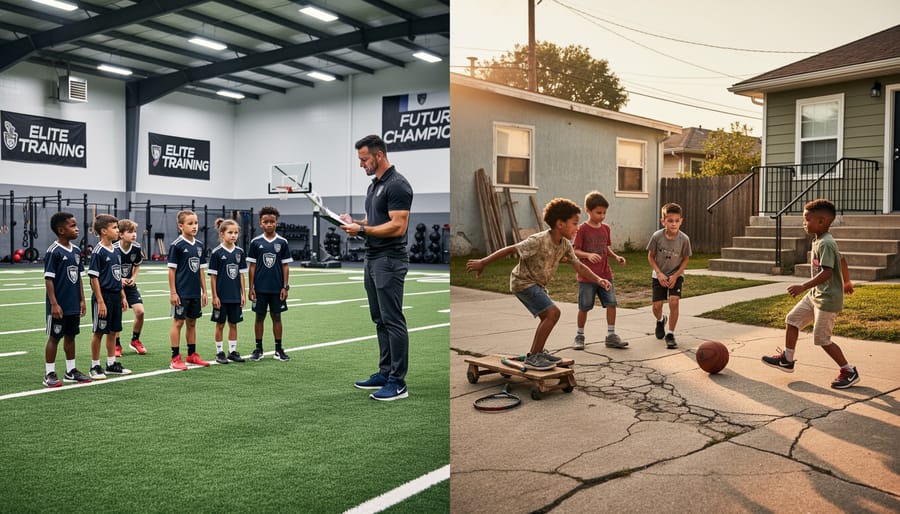
Elite competitive sport operates as a high-stakes culture built on the mythology of meritocracy, the belief that pure talent and hard work determine who reaches the podium. Yet beneath this narrative lies a complex infrastructure of resources, access, and social selection that shapes who even enters the pipeline. High-performance athletics demand early specialization, expensive coaching, travel to competitions, and often private facilities, investments that filter participants by family wealth long before talent is tested. Middle-class and affluent families can sustain years of training costs; working-class families face hard choices between athletic dreams and financial stability.
These barriers intersect with race and gender in sport-specific patterns. Tennis, swimming, and gymnastics remain disproportionately white and affluent, reflecting historical club culture and costly entry points. Basketball and track offer more accessible pathways but carry their own gatekeeping through Amateur Athletic Union systems and showcase circuits. Women athletes still contend with lower prize money, less media coverage, and scrutiny over their bodies that male counterparts rarely face.
Elite sport also commodifies athletic bodies as spectacle and national symbols. Athletes become vessels for collective identity and commercial interests, their worth measured in performance metrics and marketability. This culture celebrates winners while rendering invisible the majority who don’t make it, those without the right zip code, early coaching intervention, or body type deemed suitable for their chosen sport.
Recreational Sport and Play
Recreational sport and play occupy the spaces between institutional competition and casual movement, the weekend soccer match, the neighborhood basketball court, the after-work running group. These activities function as social glue, creating opportunities for connection, routine physical engagement, and community identity without the pressures or gatekeeping of elite performance culture. Yet access to these seemingly open spaces is far from universal. Urban planning decisions determine whether neighborhoods have parks, courts, and fields, with low-income and racialized communities historically under-resourced in public recreation infrastructure. Work schedules shape who can commit to evening leagues or Sunday morning games; shift workers, caregivers, and those in precarious employment often lack the temporal flexibility that recreational sport assumes.
Cultural capital also governs participation. Knowing the unwritten rules of pickup basketball, having the right gear, or understanding sports and music traditions tied to specific activities signals insider status and eases entry. Those unfamiliar with these codes may feel excluded even when formal barriers don’t exist. Women and gender-nonconforming individuals often navigate harassment or hyper-visibility in male-dominated recreational spaces. Recreational sport, then, is a culture of informal belonging that simultaneously reflects and reproduces social divisions, determining who gets to experience movement as joyful leisure rather than one more unattainable activity.
Physical Education
Physical education represents the most formalized and compulsory of the seven cultures, embedding movement into institutional structures that have historically served to discipline bodies and produce citizens who fit particular social ideals. The evolution of physical education from nineteenth-century military drills and calisthenics to contemporary health-focused curricula reveals shifting priorities around what bodies should do, who gets to move with competence, and how schools prepare young people for participation in broader physical culture.
For much of its history, PE functioned as a site of bodily surveillance and normalization. Standardized fitness tests, gendered activity assignments, competitive team sports, and public changing rooms created environments where bodies were measured, ranked, and exposed to peer judgment. Students who didn’t conform to athletic ideals or dominant gender norms often experienced PE as alienating or humiliating rather than empowering.
Contemporary debates center on how to make physical education genuinely inclusive. Critics challenge traditional assessment methods that privilege competitive performance over personal growth, curricula that exclude non-Western movement forms, and practices that perpetuate body shaming. Advocates for equity push for movement education that values diverse abilities, teaches lifelong skills over sport-specific techniques, and addresses how class, race, and gender shape students’ relationships with physical activity. The question remains whether PE can shift from sorting bodies into hierarchies to fostering confident, capable movers across all backgrounds.
Fitness and Wellness Industries
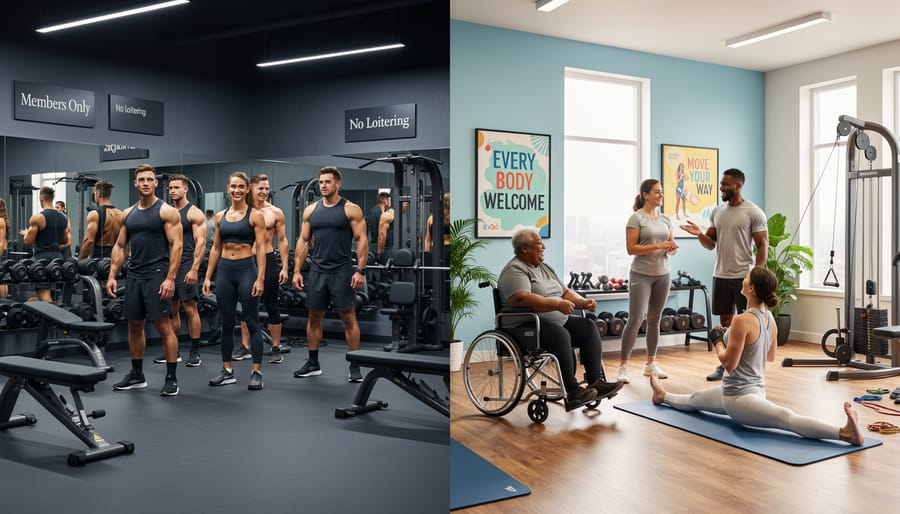
The fitness and wellness industry operates as a culture where health has been commodified and sold back to consumers as body projects requiring constant investment. Commercial gyms, boutique studios, and wellness apps promise transformation, positioning the ideal body as something to be purchased through memberships, subscriptions, and specialized equipment. This marketized approach to movement creates distinct barriers and hierarchies that extend far beyond price tags.
Class shapes access at every level. High-end studios charging £30 per session, premium gym chains, and personalized training packages remain inaccessible to many, while budget gyms often lack equipment variety, cleanliness, or welcoming environments. The proliferation of home workout apps appears democratizing, yet requires devices, internet access, and private space, resources unevenly distributed across income levels. Geographic location compounds these divides, with fitness amenities concentrated in affluent neighborhoods.
Beyond economic barriers, fitness culture enforces aesthetic ideals rooted in particular body norms. Marketing imagery overwhelmingly features lean, young, able-bodied, and predominantly white bodies, positioning these as aspirational standards. This creates psychological barriers for those whose bodies don’t fit the template, who may feel surveilled or out of place in gym environments. The wellness industry’s emphasis on “optimization” and “clean eating” often smuggles fatphobia and ableism into health discourse, framing certain bodies as problems requiring correction rather than sites of health and vitality.
The culture’s individualism obscures structural determinants of health, suggesting that fitness is a personal responsibility rather than shaped by work schedules, caregiving demands, and environmental factors.
Outdoor and Adventure Activities
Outdoor and adventure activities, hiking, climbing, surfing, backcountry skiing, carry a cultural lineage that rewards particular bodies, backgrounds, and aesthetic sensibilities. Historically, wilderness recreation in Western contexts emerged as a middle- and upper-class pursuit: conservation movements of the early twentieth century framed “pristine” nature as an escape for those with leisure time and disposable income, while simultaneously displacing Indigenous peoples whose land stewardship predated colonial boundaries. The gear-intensive, risk-seeking ethos of mountaineering and expedition culture developed within elite social clubs that excluded women, people of color, and working-class participants through membership fees, unwritten codes, and geographic remoteness.
This history persists in who feels welcome on trails and crags today. Marketing imagery overwhelmingly depicts white, able-bodied adventurers, reinforcing the notion that outdoor culture belongs to a narrow demographic. Barriers extend beyond representation: access requires transportation to trailheads often far from urban centers, expensive equipment (a climbing rack, backcountry tent, or wetsuit), and cultural knowledge about route finding or avalanche safety typically transmitted through informal mentorship networks that remain homogenous.
Recent efforts challenge these exclusions. Organizations like Outdoor Afro, Brown Girls Climb, and Latino Outdoors create affinity spaces that center historically marginalized communities, reframing nature connection as reclamation rather than escapism. Adaptive outdoor programs expand definitions of who belongs in wilderness settings, while public land access campaigns address economic and geographic inequities. These movements acknowledge that diversifying adventure culture requires dismantling gatekeeping and confronting the colonial narratives embedded in outdoor recreation itself.
Dance and Expressive Movement
Dance operates as a site where bodies become texts of cultural meaning, encoding histories of migration, resistance, and social aspiration through movement vocabularies that are never neutral. A ballerina’s turned-out fifth position carries the aesthetic legacy of French court culture and aristocratic refinement, signaling classical training that requires years of expensive lessons, specialized equipment, and bodies that conform to narrow ideals of line and proportion. This tradition has historically centered whiteness and thinness, gatekeeping professional opportunities through both explicit and tacit criteria about whose bodies “belong” in elite companies.
Hip-hop dance emerged from entirely different social conditions, Black and Latinx youth culture in 1970s New York, where breaking, popping, and locking functioned as competitive street art and community storytelling. What began as vernacular expression outside institutional validation has since been both commercialized and academicized, raising questions about who profits when marginalized cultural forms enter mainstream fitness studios and university dance programs. The same breaking that faced criminalization in public spaces now appears in boutique classes charging premium rates.
Traditional dance forms, Irish step dancing, Indian classical Bharatanatyam, West African djembe dancing, carry ethnic and diasporic identities, preserving cultural memory while navigating questions of authenticity and appropriation in multicultural societies. Gender norms pervade all dance cultures, from ballroom’s leader-follower structure to contemporary dance’s ongoing negotiation of masculine participation. Institutional recognition remains uneven: ballet receives public arts funding while social dances rooted in working-class and racialized communities struggle for legitimacy, revealing how cultural hierarchies determine which movement counts as art versus entertainment or exercise.
Therapeutic and Rehabilitative Movement
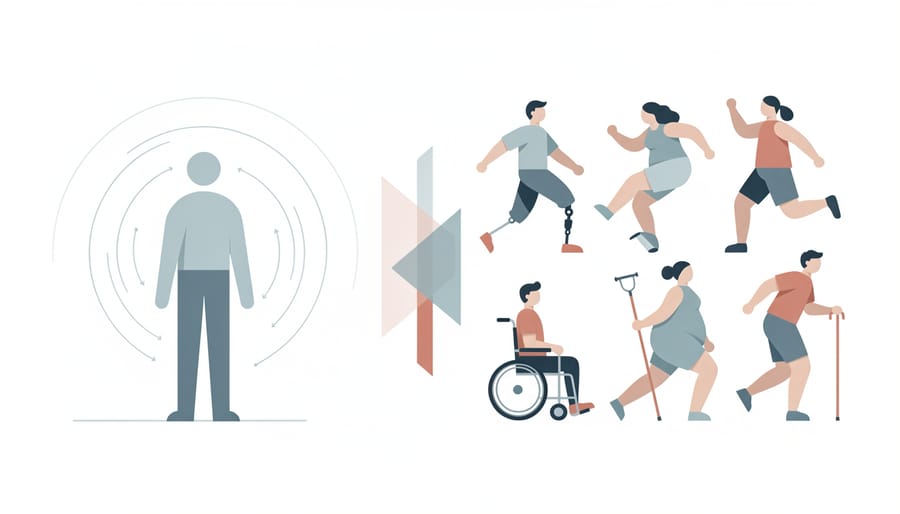
Therapeutic and rehabilitative movement encompasses physical therapy clinics, cardiac rehabilitation programs, post-surgical exercise, and adaptive sports designed for disabled athletes. Unlike recreational fitness, this culture frames physical activity primarily as medical intervention, a means to restore function, manage chronic conditions, or prevent further decline. The medical model dominates here: trained professionals assess bodies against normative standards of movement and capacity, then prescribe corrective exercises to bring patients closer to those norms.
This culture has historically positioned disability as a problem to be fixed rather than a natural form of human variation. Physical therapy protocols often prioritize walking over wheeling, standing over sitting, reflecting what disability scholars call “compulsory able-bodiedness”, the assumption that approximating non-disabled movement is always the goal. Rehabilitation spaces can reinforce shame around bodies that don’t conform, even when adapted movement patterns work perfectly well for the individual.
Disability justice perspectives challenge these assumptions. They argue that rehabilitation should center the disabled person’s own goals and quality of life rather than clinicians’ ideas of normal function. Adaptive sports, wheelchair basketball, para-rowing, goalball, demonstrate that athletic excellence exists across the spectrum of embodiment. In 2026, some rehabilitation programs have begun adopting social models of disability, recognizing that barriers often lie in inaccessible environments rather than in bodies themselves, and designing therapy that builds capacity for the life someone wants rather than the standardized outcomes a protocol demands.
Where and How These Cultures Apply Today
The 7 cultures framework has moved beyond academic theory into practical tools that shape how organizations and individuals approach physical activity in 2026. Public health departments now use this lens to audit their programming, asking which cultures receive funding and which communities remain underserved. A city designing a new recreation strategy might discover its investments overwhelmingly support elite sport facilities while neglecting accessible dance spaces or low-barrier outdoor infrastructure that serve different populations.
Practitioners apply the framework in several concrete ways:
– Program design: Creating offerings that span multiple cultures rather than defaulting to traditional sport models, ensuring pathways exist for people who don’t identify as athletes
– Policy analysis: Evaluating which physical activity cultures receive institutional support, media coverage, or insurance reimbursement, and which remain marginalized
– Historical research: Tracing how specific cultures emerged, who they served, and how exclusions were codified over time
– Marketing critique: Examining how fitness apps and wellness brands position themselves within particular cultures while excluding others through imagery, pricing, and language
– Personal reflection: Questioning one’s own movement journey and recognizing how access to certain cultures shaped identity and opportunities
Anti-racist fitness movements have adopted the framework to expose how whiteness dominates outdoor recreation narratives and commercial gym culture. Organizations like Outdoor Afro and Latino Outdoors explicitly work to reshape who belongs in adventure culture, challenging both historical exclusion and present-day microaggressions in hiking groups and climbing gyms.
In adaptive sport, practitioners use the 7 cultures lens to push back against confining people with disabilities solely to therapeutic movement. They argue for full participation across all cultures, elite competition, recreational play, expressive dance, rather than relegating disabled bodies to rehabilitation spaces alone. This shift reframes disability not as a medical problem requiring correction but as embodied difference navigating socially constructed activity worlds.
Health promotion researchers apply the framework to understand why standard fitness interventions fail certain populations. Instead of blaming individuals for non-compliance, they examine whether program design assumes middle-class norms, overlooks cultural movement traditions, or ignores structural barriers like transportation and scheduling that limit access to particular activity cultures.
Common Questions About Physical Activity Cultures
Are the 7 cultures universal across countries?
The framework is most directly rooted in Western industrial societies, but the underlying dynamics of how physical activity intersects with class, gender, and race appear globally, though in locally specific forms. What counts as “elite sport” or “fitness culture” varies dramatically by region, shaped by different colonial histories, economic systems, and movement traditions.
Can one activity belong to multiple cultures?
Absolutely, most forms of movement sit at the intersection of several cultures, and their meaning shifts with context. Running, for instance, can be elite competitive sport (marathon racing), therapeutic movement (cardiac rehab), outdoor activity (trail running), or part of fitness culture (treadmill training at a boutique studio).
How do social media and technology fit into this framework?
Platforms like Strava, Peloton, and TikTok don’t constitute a separate culture but rather reshape existing ones, blurring boundaries between recreational play, fitness markets, and performance spectacle. Virtual fitness intensifies certain dynamics, algorithmic body norms pay-to-play access, curated identity performance, while creating new entry points for people excluded from brick-and-mortar spaces.
Is one culture inherently better than others?
No culture is superior; each serves different needs and values, from the communal joy of recreational play to the clinical precision of rehabilitation. The framework encourages examining how each culture distributes access and validation rather than ranking them hierarchically.
Understanding your own participation helps illuminate which norms and gatekeepers you encounter. Start by asking what drew you to your current movement practices, who else tends to show up in those spaces, and what unspoken rules govern belonging. Notice which activities feel accessible versus off-limits, and whether barriers stem from cost, cultural capital, body expectations, or something else entirely. This self-reflection doesn’t require abandoning activities you love but rather recognizing how they’re structured and whom they might inadvertently exclude. From there, you can make more intentional choices about where to invest time and energy, seek out spaces actively challenging exclusionary patterns, or push for change within the cultures you already inhabit.
The seven cultures framework strips away the myth that physical activity is politically neutral. By mapping distinct spheres, from elite sport to therapeutic movement, this analytical lens exposes how power, identity, and access shape every domain of movement. Each culture operates according to its own logic of inclusion and exclusion, distributing resources, prestige, and belonging unevenly across lines of class, race, gender, and ability.
Understanding these cultures as constructed rather than natural opens space for intervention. When we recognize that fitness culture’s aesthetic obsessions aren’t biological imperatives but social inventions, or that outdoor recreation’s racial homogeneity reflects historical exclusions rather than inherent preferences, we can challenge the gatekeeping mechanisms that sustain these patterns. The framework doesn’t just describe inequality; it equips us to dismantle it.
This matters beyond academic analysis. Every time someone chooses a movement practice, teaches a class, designs a program, or allocates funding, they’re reinforcing or resisting the divisions these cultures embody. A youth sports coach addressing economic barriers to participation is actively reshaping competitive culture. A physiotherapist incorporating disability justice principles transforms rehabilitation norms. A gym owner questioning who their space welcomes disrupts fitness industry defaults.
The framework invites personal reckoning, too. Which cultures have you moved through? Which ones felt welcoming, which exclusionary? What assumptions about legitimate movement, worthy bodies, or proper technique do you carry from those experiences? By examining your own relationship to physical activity through this critical lens, you become better positioned to recognize exclusionary practices, and to build more inclusive, equitable cultures of movement wherever you have influence.