
Body culture is the socially organized set of practices, beliefs, and values that shape how we understand, discipline, and display our physical bodies. It determines which bodies are considered desirable, powerful, or legitimate, and it operates through institutions like gyms, sports leagues, medical systems, and media to reinforce those standards. Far from being simply about individual health or fitness choices, body culture functions as a mirror and mechanism of social inequality, revealing and reproducing hierarchies based on class, race, and gender.
Understanding body culture matters because the body is never neutral territory. Every decision about exercise, diet, appearance, or physical ability carries cultural weight and social consequences. The muscular physique celebrated in one community may be stigmatized in another. The athletic achievements of certain groups receive vastly different recognition and resources than others. Access to gyms, nutritious food, leisure time for training, and even safety while exercising outdoors is distributed unevenly across social lines.
This article explains how body culture operates as both a practical system and a symbolic framework. You’ll learn the mechanisms through which physical standards become naturalized, the different forms body culture takes across contexts, and why recognizing these patterns is essential for anyone interested in fitness, health equity, or cultural analysis. The history of physical culture in the 19th and 20th centuries provides crucial context for understanding contemporary gym culture, wellness industries, and debates about athletic inclusion. By examining body culture through a critical lens, we can better grasp why certain bodies are valorized while others are marginalized, and what that reveals about power in society.
What Body Culture Means
Body culture is more than just a personal choice about whether to run or lift weights. It encompasses the entire web of meanings, values, practices, and power relations that societies construct around the physical body. At its core, body culture refers to how communities collectively understand, discipline, display, and assign significance to human bodies, what bodies should look like, how they should move, which physical capabilities matter, and who gets to decide.
This concept extends far beyond individual fitness routines. Body culture includes the aesthetic ideals we absorb from media, the health standards promoted by medical institutions, the movement traditions passed down through generations, and the unspoken rules about acceptable bodies in different social spaces. It shapes how we judge ourselves and others, what we’re willing to spend money on, and even how we experience our own flesh and bone.
- Physical Culture
- The historical movement beginning in the late 19th century that promoted systematic exercise, diet, and bodily development as paths to health, beauty, and moral improvement. It laid the groundwork for modern fitness culture while often reinforcing hierarchies of race, gender, and class.
- Embodiment
- The lived experience of inhabiting a body, including how social contexts and cultural meanings shape our physical sensations, movements, and sense of self. It emphasizes that bodies aren’t just objects we possess but fundamental to how we experience and navigate the world.
- Somatic Practice
- Movement and body-awareness techniques that emphasize internal bodily sensations, conscious control, and the mind-body connection. Examples include yoga, Pilates, Feldenkrais, and various martial arts traditions.
- Body Capital
- The social and economic value derived from possessing a body that meets culturally approved standards of fitness, attractiveness, and ability. Like financial capital, it can be accumulated, invested, and converted into opportunities, status, and privilege.
- Corporeal Norms
- The largely invisible standards that define which bodies are considered normal, healthy, attractive, or acceptable within a given society. These norms vary across cultures and time periods but always carry consequences for those who don’t conform.
What distinguishes body culture from simply “fitness” is its attention to power and meaning. When you choose a workout, you’re not just burning calories, you’re participating in systems that elevate certain body types while marginalizing others, that link physical appearance to moral worth, and that distribute access to health and longevity unequally across race, gender, and class lines. Body culture asks us to examine not just what we do with our bodies, but why those practices feel natural, desirable, or necessary in the first place.
How Body Culture Works in Society
Institutional Transmission
Schools drill body norms into children from the earliest grades. Physical education classes don’t just teach movement, they rank bodies through fitness tests, timed runs, and public weigh-ins that label some students “fit” and others deficient. The Presidential Fitness Test, used for decades in American schools, created clear hierarchies of acceptable bodies, rewarding speed and strength while marking slower, heavier, or less coordinated children as failures. These assessments teach kids that bodies are measurable, comparable, and subject to institutional judgment.
Medical systems enforce body standards through BMI charts, growth percentiles, and clinical definitions of “healthy weight.” Doctors’ offices become sites where bodies are evaluated against universal norms, often ignoring how these standards were developed primarily from white, middle-class populations. A patient’s weight becomes a moral issue, with physicians prescribing diet and exercise as remedies even when discussing unrelated health concerns. Insurance companies reinforce these judgments by tying premiums to body metrics and funding “wellness programs” that reward weight loss.
Fitness industries capitalize on institutionally-created anxieties by selling solutions. Gyms market transformations that align with medical definitions of health and school-taught ideals of athletic bodies. Certification programs for trainers standardize what counts as proper exercise technique and appropriate fitness goals, creating professional gatekeepers who determine legitimate body improvement methods. Together, these institutions form an ecosystem that defines, measures, and corrects bodies according to narrow standards presented as objective health requirements.
Media and Representation
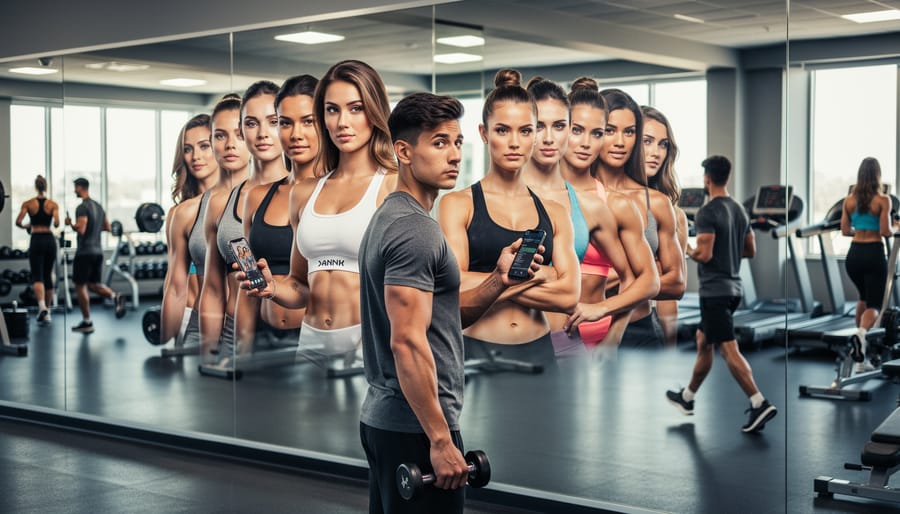
Advertising has historically wielded enormous power in codifying which bodies count as fit, desirable, and worthy of public visibility. From the muscular male physiques in early 20th-century fitness magazines to the ultra-lean female bodies dominating 1990s aerobics campaigns, commercial media has consistently narrowed the spectrum of acceptable body types while presenting these norms as universal ideals rather than cultural constructions. These images don’t merely reflect existing preferences, they actively shape them, creating aspirational standards that drive consumer behavior while marginalizing bodies that fall outside the frame.
Social media has accelerated and democratized this process, though not always toward greater inclusivity. Instagram fitness influencers, TikTok workout trends, and YouTube transformation videos create a constant stream of body comparison opportunities. The algorithmic amplification of certain body types, typically young, able-bodied, and conforming to conventional beauty standards, reinforces narrow ideals even as niche communities champion alternatives. Before-and-after photos, progress tracking, and public accountability posts transform personal fitness into spectacle and social currency.
Yet the same platforms enabling harmful comparison also host resistance movements. Body-positive activists, adaptive athletes, and Health At Every Size advocates use visual media to challenge dominant narratives, though studies like HAES interventions evidence show these counter-narratives struggle against entrenched commercial interests. The question remains whether representation expands genuine acceptance or simply creates new markets for previously excluded bodies.
Forms of Body Culture Across Contexts
Performance-Oriented Cultures
Performance-oriented body cultures revolve around quantifiable progress, competitive achievement, and the systematic development of physical capabilities. These cultures prioritize metrics, speed, strength, endurance, power output, and organize training around objective benchmarks rather than subjective wellness or aesthetic goals alone.
Competitive athletics exemplify this orientation most clearly. Athletes structure their lives around periodized training cycles, performance testing, and event preparation. Every workout session carries a measurable purpose: improving a personal record, refining technique under fatigue, or building capacity for competition demands. The rhythm in athletic training becomes crucial as athletes synchronize movement patterns, recovery protocols, and mental preparation to peak at the right moment.
Bodybuilding represents another performance culture, though the “performance” occurs on stage rather than field or track. Competitors manipulate body composition through precise nutritional timing and resistance training protocols, pursuing symmetry, muscle development, and conditioning judged against established aesthetic criteria. Success requires obsessive measurement of macros, body fat percentage, and progressive overload.
Sport-specific conditioning programs similarly emphasize targeted adaptation. Fighters build explosive power and cardio capacity for rounds; cyclists optimize lactate threshold and pedal efficiency; swimmers refine stroke mechanics and turns. Each discipline demands different physical qualities, creating distinct training cultures with their own languages, hierarchies, and markers of achievement.
Health and Wellness Cultures
Health and wellness cultures prioritize body practices that claim to integrate physical, mental, and spiritual dimensions rather than emphasizing competition or measurable performance. Yoga studios, Pilates reformer classes, tai chi groups, and mindfulness-based movement programs frame their offerings around stress reduction, injury prevention, postural alignment, and longevity. These cultures often position themselves as alternatives to “aggressive” gym training, appealing particularly to middle-class women and older adults seeking gentler approaches to fitness.
The wellness framing carries distinct class and racial dimensions. High-end yoga studios charge premium prices for practices with roots in South Asian traditions, repackaging spiritual disciplines as boutique fitness experiences while often erasing their cultural origins. Pilates, developed initially for rehabilitation, now flourishes in expensive urban studios with specialized equipment. Meanwhile, accessible community versions of these practices remain less visible and less valued.
Disease prevention rhetoric permeates wellness cultures, with practices marketed as solutions to chronic pain, anxiety, metabolic syndrome, and aging itself. This positions the wellness-oriented body as responsible, self-disciplined, and health-conscious, a form of embodied morality that implicitly judges those who cannot afford or access these spaces.
Subcultural and Resistance Movements
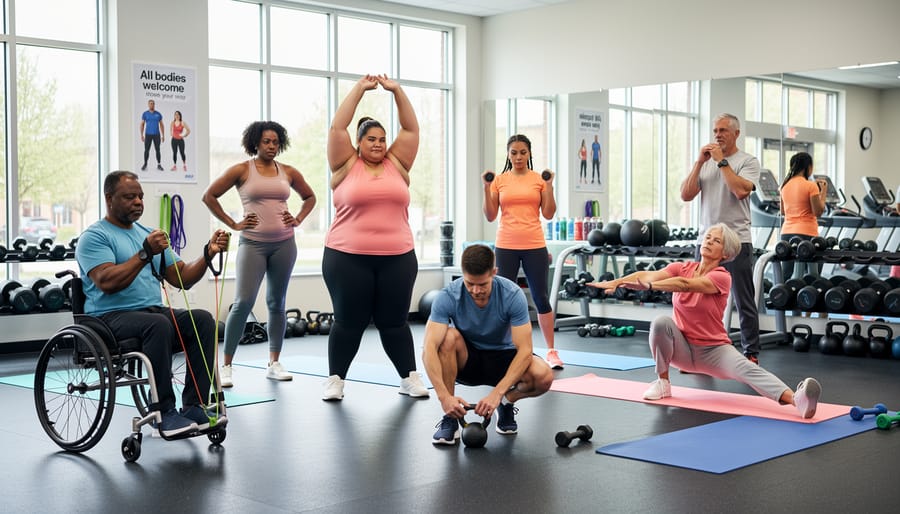
Throughout history, fitness communities have emerged specifically to contest dominant body standards and exclusionary practices. Body-positive fitness spaces prioritize movement for pleasure, strength, and mental health rather than weight loss or conforming to aesthetic ideals. These communities actively reject diet culture messaging and create environments where participants of all sizes engage in yoga, dance, strength training, and martial arts without shame or pressure to shrink.
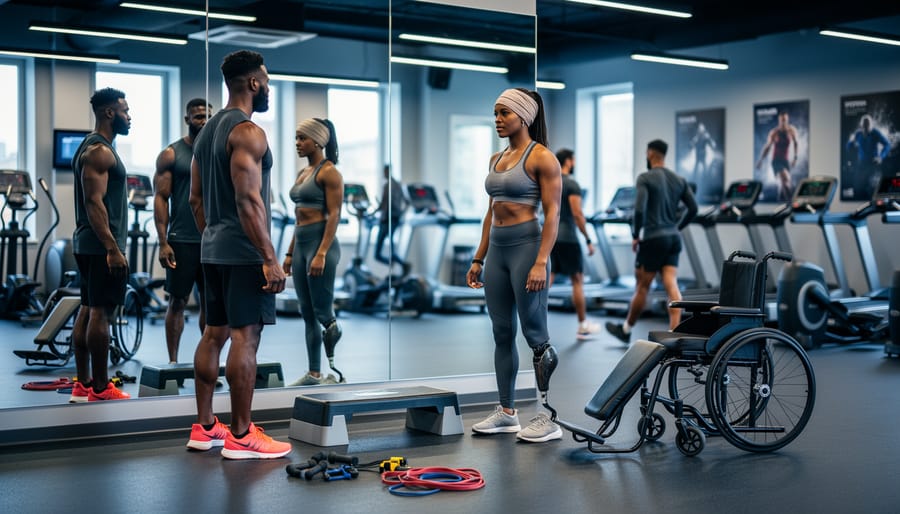
Adaptive athletics challenges assumptions about what bodies can do and who belongs in fitness spaces. Athletes with disabilities have built entire training cultures, wheelchair basketball leagues, adaptive CrossFit gyms, blind running clubs, that center capability rather than limitation. These movements expose how mainstream fitness environments often exclude through inaccessible design and narrow definitions of athleticism.
Countercultural training philosophies like parkour, capoeira, and outdoor movement culture reject commercialized gym settings and performance metrics. They emphasize play, community, environmental connection, and movement as creative expression rather than body modification. Some explicitly position themselves against capitalist fitness culture, offering free outdoor training sessions and skill-sharing rather than paid memberships.
These resistance movements don’t just provide alternatives, they fundamentally question whose bodies matter and what fitness should serve.
How Body Culture Is Used and Applied
Building and Signaling Identity
Fitness practices function as identity markers that communicate social positioning before a word is spoken. A woman who practices CrossFit signals different values and affiliations than one who attends barre classes, just as someone with visible muscle definition makes claims about discipline and lifestyle that differ from those made by a runner’s lean frame. These choices aren’t merely personal preferences, they’re statements about who we are and which communities we belong to.
Gender identity gets constructed and contested through movement. Men who lift weights reinforce traditional masculinity, while those who practice yoga often navigate questions about their manhood. Women bodybuilders challenge feminine norms with every rep, whereas marathon runners sometimes conform to acceptable forms of female athleticism. Non-binary individuals create new embodied possibilities through their training choices, refusing the gender scripts that gyms traditionally enforce.
Class markers saturate body culture. The time-intensive rituals of boutique fitness, SoulCycle, Pilates reformer sessions, personal training, require economic resources that working-class schedules and budgets can’t accommodate. A toned, lean physique increasingly signals not just health but the leisure time and disposable income to achieve it. Conversely, powerlifters and garage-gym enthusiasts often embrace working-class aesthetics that reject elite wellness culture.
Racial identity operates through fitness in complex ways. Black athletes reclaim strength training as resistance to stereotypes while navigating predominantly white gym spaces. Asian practitioners of martial arts negotiate between cultural heritage and Orientalist expectations. These bodily practices become sites where racial identity is both performed and politicized.
Navigating Social Hierarchies
A toned, athletic physique functions as currency in contemporary society, opening doors that remain closed to those whose bodies fail to meet prevailing standards. Employment research consistently demonstrates that candidates perceived as physically fit receive higher salary offers, better performance evaluations, and faster promotions than equally qualified peers who appear overweight or out of shape. This bias operates most intensely in client-facing roles, sales positions, and corporate leadership tracks where physical presentation gets coded as professionalism, discipline, and competence.
The stakes climb higher for marginalized communities navigating overlapping systems of oppression. Black women in professional environments face compound penalties when their natural hair, body shape, or fitness presentation diverges from white middle-class norms, forcing painful choices between authentic embodiment and career advancement. Working-class individuals often lack the time, money, and energy to maintain the boutique fitness routines and specialized diets that signal upper-middle-class belonging, creating visible markers of class difference that affect everything from dating app matches to neighborhood acceptance. These dynamics amplify the physical culture tensions that shape who gains entry to valued social spaces and who remains excluded based on bodily presentation alone.
Political and Activist Uses
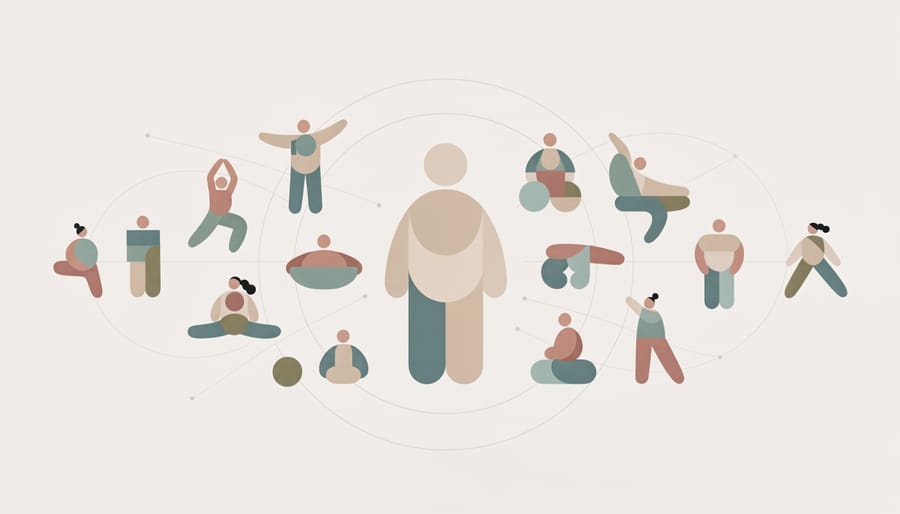
Body culture has long served as a terrain for political resistance and social transformation. In the early 20th century, suffragettes incorporated physical training into their activism, recognizing that cultivating strength and endurance challenged Victorian notions of female fragility and demonstrated women’s capacity for full citizenship. Physical competence became inseparable from the demand for political rights.
Contemporary movements continue this legacy of embodied resistance. The body positivity and fat liberation movements reject medicalized narratives that pathologize larger bodies, reframing fitness as a practice divorced from weight loss imperatives. Disability justice activists challenge ableist assumptions embedded in mainstream fitness culture, advocating for accessible movement spaces and celebrating diverse embodiments. Black and Indigenous fitness communities reclaim ancestral movement practices while confronting the white-centered aesthetics that dominate commercial gyms.
These activist applications reveal how struggles over body capital and access extend beyond individual health to questions of who deserves space, resources, and recognition. By refusing dominant body standards and creating alternative fitness cultures, activists transform body culture from a mechanism of social control into a vehicle for collective empowerment and structural critique.
Body Culture and Social Divisions: Historical Perspectives
Race and the Politics of the Fit Body
The racialization of fitness ideals has deep historical roots in eugenics movements that used physical development as supposed evidence of racial superiority. Early twentieth-century physical culture advocates frequently promoted exercise regimes explicitly designed to preserve “racial vitality,” linking muscular development to nationalist and white supremacist agendas. These ideologies positioned certain body types as naturally athletic or inferior, creating hierarchies that persist in subtle forms today.
Contemporary fitness culture continues to navigate this legacy through patterns of representation and appropriation. Mainstream fitness media disproportionately features white bodies as the standard of health and athleticism, while simultaneously exoticizing practices like yoga, capoeira, and martial arts, divorcing them from their cultural origins and repackaging them for Western consumption. Black bodies face particular contradictions: celebrated in competitive athletics yet underrepresented in recreational fitness spaces and wellness marketing.
Digital platforms, including fitness apps and wearables have amplified these dynamics by defaulting to body metrics and aesthetic standards rooted in white, Western norms. The algorithms underlying personalized fitness recommendations often fail to account for diverse body compositions, movement traditions, or culturally specific health indicators. Resistance emerges through Black-owned gyms, Indigenous fitness initiatives, and online communities that centre marginalized perspectives, reclaiming body culture as a site of racial justice rather than division.
Gender and Embodied Norms
Victorian anxieties about women’s physical exertion reveal how deeply gender has shaped body culture. Medical authorities warned that vigorous exercise would damage reproductive organs, drain energy from maternal duties, or produce unfeminine muscularity. Women who pursued athletics faced accusations of moral deviance, their physical competence framed as a threat to social order. Even as women’s calisthenics gained acceptance in the late 1800s, the prescribed movements emphasized grace and posture over strength or endurance.
Masculine body ideals underwent parallel transformations. The lean, wiry physique valued in early industrial society gave way to muscular bulk as a marker of power and control. Bodybuilding culture in the mid-20th century codified extreme muscularity as the pinnacle of masculinity, reinforcing narrow definitions of male embodiment that excluded smaller, disabled, or gender-nonconforming bodies.
Contemporary fitness spaces increasingly challenge these binaries. LGBTQ+ gyms, women-only weightlifting communities, and trans-affirming studios create alternatives to gender-policing environments. Yet mainstream fitness culture still circulates gendered prescriptions: “toning” for women, “bulking” for men. These divisions persist despite growing recognition that strength, flexibility, and endurance belong to all bodies, regardless of gender identity.
Class, Access, and Body Capital
Economic resources fundamentally determine who can cultivate and maintain socially valued bodies. Gym memberships, personal trainers, organic groceries, meal prep services, and recovery therapies remain financially out of reach for many working-class households. Beyond direct costs, leisure time itself becomes a luxury when multiple jobs or childcare responsibilities consume available hours. The contemporary emphasis on boutique fitness, SoulCycle, CrossFit boxes, Pilates reformer studios, creates distinctly class-coded spaces where participation signals disposable income as much as health commitment.
Body capital, the social value attached to appearing fit and well-maintained, operates as both cultural currency and barrier. Tanned, toned physiques requiring significant time investment communicate class privilege. Meanwhile, bodies marked by labor, calloused hands, muscular bulk from manual work rather than aesthetic training, carry different, often stigmatized meanings. This creates a paradox where working-class physical jobs produce strength but not the sleek, carefully sculpted appearance that translates into social and professional advantage in middle-class contexts.
Contemporary Body Culture in 2026
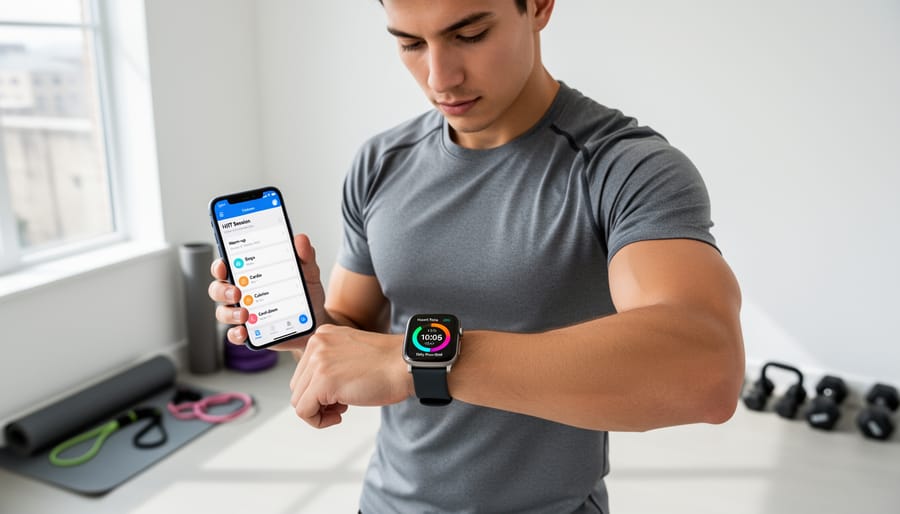
Contemporary body culture in 2026 reflects both continuity with past patterns and notable shifts driven by technology, social movements, and evolving understandings of health. Digital platforms now mediate most fitness engagement, from algorithmically curated workout recommendations to social comparison through progress photos and performance metrics. This creates unprecedented visibility for diverse body types and training philosophies, yet also intensifies surveillance and quantification of the body, every step counted, every calorie logged, every workout streamed and rated. The rise of boutique fitness studios charging $40-plus per class has further stratified access along class lines, positioning certain forms of movement as luxury lifestyle experiences rather than basic health practices.
Several trends currently shape the landscape:
- Fitness technology and wearables that track biometrics, sleep, and recovery, embedding data collection into everyday movement
- Virtual training platforms and on-demand classes that democratize access but also isolate exercise from community spaces
- Body neutrality movements that shift focus from appearance to function, challenging both diet culture and body positivity’s appearance-focus
- Inclusive gym design efforts addressing accessibility for disabled people, gender-neutral facilities, and size-inclusive equipment
- Anti-diet culture advocacy challenging weight loss as a default fitness goal and questioning the conflation of thinness with health
The Health At Every Size framework has gained institutional traction in some healthcare and fitness settings, yet weight stigma remains pervasive in gyms and medical encounters. Biohacking communities pursue optimization through supplements, cold exposure, and metabolic monitoring, often framing it as personal empowerment while reproducing class privilege through expensive interventions. Meanwhile, grassroots fitness collectives, particularly those led by queer people, people of color, and fat activists, create alternative spaces that explicitly reject mainstream body norms and center pleasure, community, and political solidarity rather than aesthetic transformation.
Tensions persist between commercialized wellness culture and genuine accessibility. Major fitness brands incorporate inclusive imagery in marketing while maintaining structural barriers like high membership costs, intimidating environments, and trainer certification programs that don’t address bias. The pandemic accelerated home fitness adoption, which offered privacy and flexibility but also reinforced isolation and the privatization of what were once communal practices. Contemporary body culture thus operates across fragmented spaces, some more equitable, many still structured by the same racial, gender, and class hierarchies that have always shaped who gets to move, how, and for what purposes.
Common Questions About Body Culture
Body culture touches every aspect of how we relate to our physical selves, yet confusion persists about what it truly encompasses and why it matters beyond individual health choices. These questions emerge repeatedly in academic discussions and public conversations about fitness, identity, and social justice.
Is body culture the same as fitness culture?
No. Fitness culture focuses primarily on exercise practices and physical conditioning, while body culture encompasses the broader set of beliefs, values, and social meanings attached to bodies, including but not limited to fitness. Body culture includes aesthetic ideals, health norms, movement practices, and the power dynamics that shape who gets to define what counts as a “good” body.
How does body culture affect mental health?
Body culture shapes mental health through the internalization of often unattainable physical ideals, creating anxiety, shame, and disordered relationships with food and exercise. However, body culture can also support mental wellbeing when communities foster acceptance, challenge harmful norms, and frame movement as joyful rather than punitive.
Can body culture be truly inclusive?
Inclusivity requires more than representation in marketing, it demands structural changes in how fitness spaces operate, who designs movement practices, and whose bodies are centered as the default. Genuinely inclusive body cultures redistribute resources, challenge ableism and sizeism, and recognize diverse movement traditions rather than appropriating them.
What role does social media play in shaping body culture?
Social media amplifies both harmful and liberatory aspects of body culture, simultaneously spreading narrow beauty standards through algorithms that reward certain body types while enabling marginalized communities to build alternative fitness narratives and challenge mainstream norms. The platform matters less than who controls the narrative and whose bodies are valued.
Understanding these nuances helps distinguish between surface-level diversity initiatives and meaningful transformation. The question of whether body culture can be inclusive, for instance, exposes how deeply inequality is embedded in fitness institutions. A gym that adds a single larger-size mannequin while maintaining equipment designed only for smaller bodies, pricing that excludes working-class members, and imagery that centers thin white women hasn’t created inclusion, it has performed it.
Cultural background profoundly influences how individuals experience and navigate body culture, yet mainstream fitness often treats Western, particularly American, approaches as universal. Someone raised in a culture that values communal dance, martial arts rooted in spiritual practice, or daily physical labor may find the individualistic, metrics-obsessed gym environment alienating. Recognizing these differences matters for building body cultures that honor rather than erase diverse movement traditions.
Body culture is never just about individual health or aesthetic preference. It is a social force, deeply embedded in structures of power, that both mirrors and reinforces divisions along lines of race, gender, and class. The ideals we pursue in gyms, the standards we internalize from media, the access we have to wellness resources, all are shaped by historical inequities and ongoing systems of privilege. Recognizing this does not diminish the value of physical practice. Instead, it invites a more honest reckoning with what we ask bodies to signify and who gets left out when fitness becomes a marker of moral worth or social status.
Critical awareness matters. When we understand how body culture operates, we can interrogate whose norms we are following and why. We can ask whether our practices create space for difference or demand conformity. We can recognize that resistance is already happening, in adaptive athletics, body-positive movements, and community-led fitness initiatives that prioritize access over aesthetics.
The study of physical culture and social divisions remains urgent. Scholars, activists, and practitioners continue to challenge exclusionary norms, document lived experiences, and reimagine what equitable movement cultures might look like. The work is not finished. A more inclusive body culture requires ongoing effort, not just good intentions, and a willingness to redistribute resources, rethink standards, and listen to voices historically marginalized in fitness spaces.