

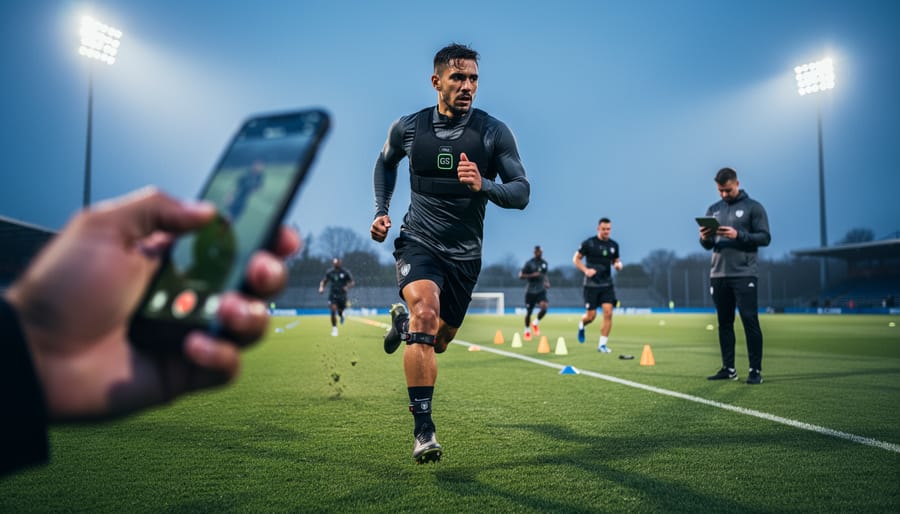
Examine how commercial betting platforms like bet aposta tudo have fundamentally restructured athletic preparation, transforming bodies from sites of personal achievement into commodified spectacles governed by algorithmic predictions and market fluctuations. This intersection between wagering economies and physical training reveals profound shifts in how contemporary societies value athletic performance, discipline, and bodily capital.
Recognize that football betting culture operates as more than entertainment—it functions as a disciplinary apparatus that reshapes training methodologies, dietary practices, and recovery protocols according to market demands rather than holistic health principles. Athletes increasingly calibrate their fitness regimens to meet betting odds and fantasy league projections, creating a feedback loop where commercial interests dictate physiological development patterns.
Investigate the historical trajectory from early twentieth-century amateur athletics, where fitness served communal and nationalist purposes, to today’s hyper-commercialized landscape where training data feeds predictive betting algorithms. This evolution exposes class dimensions in access to performance-enhancing technologies, gender disparities in betting market attention, and the erosion of sport as participatory culture.
Analyze how fitness practices now incorporate betting analytics—tracking metrics like sprint speeds, recovery rates, and injury probabilities not primarily for athlete wellbeing but for wagering accuracy. This commodification extends beyond professional ranks into amateur leagues and fitness communities, normalizing surveillance capitalism’s penetration into bodily autonomy.
Understanding this cultural phenomenon requires examining both macro-level economic structures and micro-level training adaptations, revealing how contemporary bodies become simultaneously betting assets and sites of disciplinary control within global sports-gambling infrastructures.
The Evolution of Football Betting: From Sideline Activity to Industry Powerhouse
Historical Roots of Football Wagering
Football wagering emerged as a distinctly working-class phenomenon in early 20th-century Britain, intertwining with the physical culture and social rhythms of industrial communities. The football pools system, formalized in the 1920s, transformed casual betting into an organized weekly ritual that connected laborers’ modest wagers to distant matches they would never attend. Unlike the exclusive gambling houses frequented by the wealthy, pools coupons circulated through factories, mines, and dockyard communities, creating networks of shared speculation and collective hope.
This betting culture existed alongside the early 20th-century athletic culture that emphasized physical prowess and working-class masculinity. Men gathered in pubs and social clubs to discuss both match outcomes and training regimens, blurring lines between spectator investment and personal fitness aspirations. The physicality of football heroes became aspirational, inspiring amateur athletic pursuits even as wagering remained economically motivated.
These betting practices served important social functions beyond financial gain. Pool syndicates fostered workplace solidarity, while the communal analysis of team form and player fitness created spaces for working-class intellectual engagement often dismissed by mainstream society. Women’s participation, though less documented, occurred primarily through family pools and neighborhood networks, challenging assumptions about gendered leisure practices. This pre-digital wagering landscape was fundamentally communal and geographically rooted, contrasting sharply with today’s individualized online betting platforms that disconnect wagers from physical community spaces and embodied sports culture.

The Digital Revolution and Market Expansion
The late 1990s and early 2000s marked a transformative period when internet connectivity fundamentally altered football betting’s landscape and, consequently, its relationship with athletic performance monitoring. Traditional bookmakers, once confined to physical premises and pre-match odds, suddenly faced competition from digital platforms offering live, in-play betting that responded to real-time match developments. This shift created unprecedented demand for granular performance data, transforming how players’ physical capabilities were assessed and scrutinized.
Online betting platforms leveraged emerging data analytics technologies to generate odds that updated every few seconds, responding to tackles won, sprints completed, and territorial possession. This technological sophistication required bookmakers to develop comprehensive databases tracking individual athletes’ fitness metrics, injury histories, and even psychological resilience under pressure. The market expansion was extraordinary: global sports betting revenues grew from approximately $40 billion in 2003 to over $200 billion by 2020, with football commanding the largest share.
This digital revolution had profound implications for training practices. Clubs recognized that public performance data influenced their players’ market valuations and betting odds, creating financial incentives to optimize visible fitness indicators. GPS tracking, heart rate monitoring, and biomechanical analysis transitioned from experimental tools to standard practice, partly driven by the betting industry’s appetite for predictive information. The democratization of performance statistics through betting platforms also meant supporters could scrutinize individual fitness levels with unprecedented detail, adding social pressure to maintain peak conditioning. This convergence of commercial betting interests and athletic development created a feedback loop where market speculation increasingly shaped training priorities and performance expectations.
Performance Under the Microscope: How Betting Markets Intensified Fitness Demands
The Quantification of Athletic Bodies
The commodification of athletic performance reached new heights as betting markets demanded increasingly granular data about player capabilities. What began in the early 2000s as basic statistics evolved into comprehensive biological monitoring systems that transformed athletes into walking datasets. Bookmakers, seeking competitive advantages in odds-setting, invested heavily in predictive analytics that required precise measurements of fatigue levels, injury susceptibility, and performance potential. This commercial imperative drove sports organizations to adopt sophisticated tracking systems that would have seemed intrusive just decades earlier.
The proliferation of fitness tracking technology across professional sports stemmed partly from betting industry pressure for reliable performance indicators. GPS vests measuring distance covered, heart rate variability monitors assessing recovery capacity, and biomechanical sensors analyzing movement patterns became standard equipment. These technologies positioned athletes as quantifiable entities whose value could be mathematically modeled and predicted. The historical parallel to industrial efficiency studies is striking—where Frederick Taylor once timed factory workers with stopwatches, contemporary sports science dissects every physiological variable affecting athletic output.
This data-driven approach fundamentally altered training philosophies. Coaches increasingly relied on algorithmic recommendations rather than experiential wisdom, while athletes learned to interpret their bodies through numerical readouts rather than intuitive awareness. The cultural implications extend beyond elite sport, as recreational fitness adopted similar quantification practices. Wearable devices and performance apps normalized the concept of bodies as optimization projects, measurable and improvable through data analysis. This transformation reflects broader societal trends toward surveillance capitalism, where personal biological information becomes extractable value for multiple stakeholders—from betting syndicates to insurance companies—raising profound questions about bodily autonomy and commercialization.
Financial Stakes and Injury Prevention
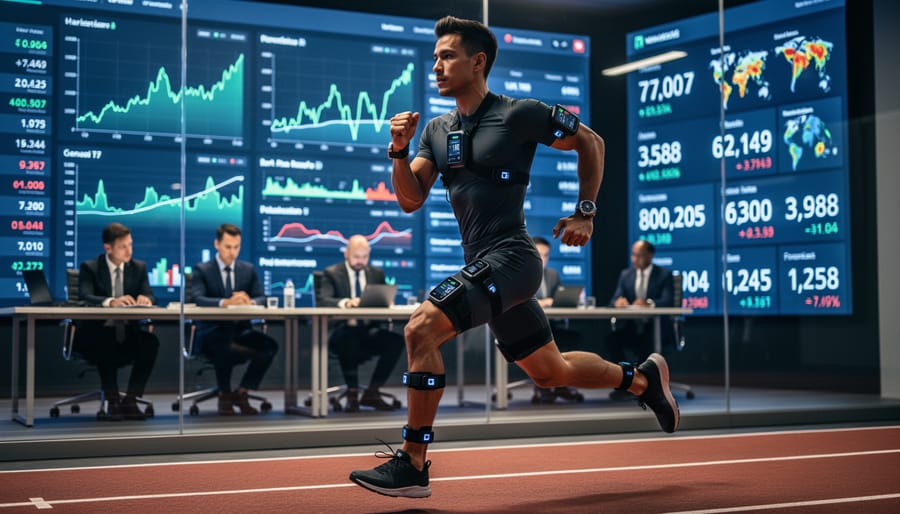
The financial architecture of modern football betting has created an intriguing paradox that fundamentally shapes how clubs approach player fitness. Bookmakers and fantasy sports platforms depend entirely on player availability—an injured star disrupts betting markets and reduces consumer engagement. This economic reality has inadvertently positioned betting interests as advocates for sophisticated injury prevention protocols, though the underlying motivations diverge sharply from player welfare concerns.
Historically, players were expected to perform through minor injuries, a cultural remnant from football’s working-class origins when toughness signified masculinity and commitment. However, contemporary betting markets have transformed this calculus. When millions of dollars flow through wagers predicated on specific players appearing in matches, clubs face intensified pressure to maintain roster stability. This financial imperative has accelerated adoption of advanced recovery technologies—cryotherapy chambers, GPS-based load monitoring systems, and data-driven rest protocols—that might otherwise have faced budgetary resistance.
The paradox deepens when considering performance demands. While betting markets incentivize availability, they simultaneously reward peak athletic output, creating tension between conservative load management and competitive intensity. Sports scientists now navigate this duality, balancing preventative measures against the commercial necessity of maintaining form. This intersection reveals how external financial forces can unexpectedly drive progressive fitness practices, even as they fundamentally reshape the relationship between athletic bodies and market imperatives, raising questions about whose interests truly govern player health in commercialized sport.
Training Innovations Born from Market Pressures
High-Intensity Interval Training and Match Simulation
The commercial explosion of in-play betting during the 2000s fundamentally altered how football clubs approached conditioning protocols. As bookmakers began offering odds on second-half goal scoring, injury-time outcomes, and late-game substitutions, betting markets inadvertently revealed which teams maintained performance levels beyond the 70-minute mark. Data analysts tracking betting patterns noticed correlations between clubs that commanded favorable late-game odds and those implementing high-intensity interval training methodologies.
This market feedback loop accelerated adoption of HIIT protocols specifically designed for football’s unique demands. Unlike traditional steady-state cardio that dominated pre-2000s training regimens, modern interval approaches replicate match conditions: repeated bursts of explosive power followed by active recovery periods. The historical shift mirrors broader changes in working-class leisure culture, where time-efficient training methods appealed to amateur players juggling employment and athletic pursuits.
Physiologically, these protocols train both phosphocreatine and glycolytic energy systems simultaneously, enabling players to execute sprints in the 89th minute with comparable force to opening kickoff efforts. Research from sports science departments demonstrated that athletes completing twice-weekly HIIT sessions maintained 92-95% of their maximum sprint speed throughout full matches, compared to 78-82% among traditionally trained counterparts.
The democratization of these elite-level methods through online fitness communities created unexpected cultural bridges between professional athletic science and recreational training enthusiasts. Betting culture’s obsessive focus on quantifiable late-game metrics thus indirectly popularized evidence-based endurance training across socioeconomic boundaries, transforming weekend warriors into sophisticated practitioners of periodized conditioning.
Neuromuscular Training and Consistency
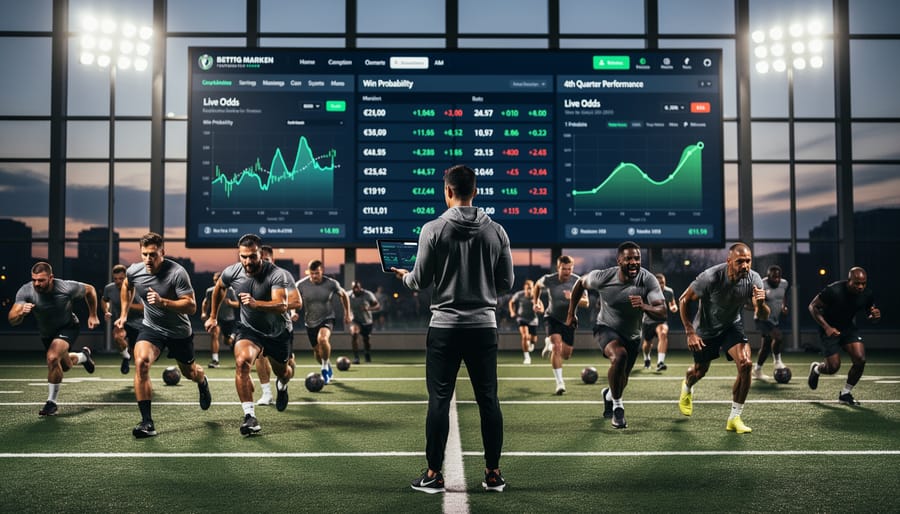
In contemporary football, the stakes of predictability have never been higher. Betting markets increasingly rely on sophisticated algorithms that forecast player performance with remarkable precision, creating financial incentives for clubs to minimize the variability that once characterized athletic output. This commercial pressure has accelerated adoption of neuromuscular training protocols specifically designed to produce consistent physical responses across competitive fixtures.
Historically, football training emphasized conditioning and tactical rehearsal, but modern neuromuscular training principles target the nervous system’s role in coordinating movement patterns. These protocols focus on proprioceptive exercises, reactive agility drills, and eccentric loading techniques that enhance motor control while reducing injury-related unpredictability. Research from Scandinavian sports institutes in the early 2000s demonstrated that structured neuromuscular warm-ups could decrease anterior cruciate ligament injuries by up to 50 percent, a finding that resonated powerfully with betting syndicates seeking reliable performance data.
The convergence raises compelling questions about athletic autonomy. When training methodologies prioritize consistency over creative expression, athletes become more legible to predictive models but potentially less adaptable to unexpected match scenarios. This tension reflects broader power dynamics within commercialized sport, where financial imperatives increasingly shape bodily practices. The cultural implications extend beyond betting markets, revealing how economic systems subtly reconfigure our understanding of optimal human performance, privileging standardization over the unpredictable brilliance that historically defined elite athleticism.
Body Culture, Class, and Access: Who Benefits from Betting-Driven Fitness Evolution?
The Professionalization Gap
The chasm between professional and grassroots football reveals stark inequalities in fitness infrastructure that betting culture rarely acknowledges. Elite clubs command multi-million dollar training facilities with cryotherapy chambers, altitude simulation rooms, and dedicated sports scientists monitoring every physiological metric. Meanwhile, semi-professional and amateur players—who generate minimal betting interest despite considerable skill—often train on poorly maintained pitches with limited access to qualified fitness professionals.
This professionalization gap has historical roots in football’s commercialization during the late twentieth century, when television revenue and gambling markets increasingly concentrated resources at the sport’s apex. The disparity extends beyond equipment to knowledge systems themselves. Professional academies employ periodization models and evidence-based recovery protocols, while lower-league players frequently rely on outdated training methods passed down through informal mentorship networks.
What proves particularly striking is how betting markets mirror these inequalities. Wagering activity concentrates overwhelmingly on top-tier competitions where infrastructure advantages are most pronounced, creating a self-reinforcing cycle. The millions invested in elite player conditioning partly stems from clubs protecting gambling-driven broadcasting revenues, yet this same financial ecosystem offers little trickle-down benefit to grassroots levels where the majority of football culture actually flourishes. This disconnect between aspiration and access shapes fitness practices across the amateur game, where players emulate professional routines without corresponding support systems.
Gender and Betting Market Valuation
The stark disparity in betting market valuations between men’s and women’s football reveals a troubling economic reality that cascades directly into training resources and fitness infrastructure. While men’s premier leagues attract billions in betting revenue, women’s football represents less than one percent of global sports betting markets. This commercial disinterest translates into measurably different investment in equivalent fitness resources.
Historically, women’s football was actively suppressed in many countries throughout the twentieth century, with England’s Football Association famously banning women from playing on league grounds until 1971. This legacy of marginalization continues through modern betting culture, where bookmakers view women’s matches as insufficiently profitable to warrant sophisticated odds-making systems or promotional investment. The resulting revenue gap means women’s teams operate with training facilities, sports science support, and recovery technologies that lag decades behind their male counterparts.
Cross-disciplinary research from sports economics and gender studies demonstrates how betting market attention functions as a predictor of infrastructure investment. Clubs receiving substantial betting-related sponsorships can afford specialized strength coaches, advanced biomechanical analysis, and cutting-edge recovery protocols. Women’s teams, excluded from this financial ecosystem, frequently share training grounds, access limited physiotherapy services, and lack individualized nutrition programs that male athletes consider standard. This systemic underinvestment perpetuates performance gaps that betting markets then cite as justification for continued minimal coverage, creating a self-reinforcing cycle of inequity.
What Football’s Betting-Fitness Nexus Teaches Everyday Athletes
Data-Driven Training for Personal Fitness
The democratization of athletic performance tracking represents one of the most significant shifts in personal fitness over the past decade. What once required expensive laboratory equipment and professional coaching staff has become accessible through consumer wearables and smartphone applications. This transition mirrors broader patterns observed in football betting culture, where specialized knowledge previously held by industry insiders has gradually become available to everyday enthusiasts through digital platforms.
Professional football clubs have long employed sophisticated biometric monitoring systems to optimize player conditioning, recovery, and injury prevention. These technologies track metrics including heart rate variability, sleep quality, GPS-based movement patterns, and workload distribution. As manufacturing costs declined and algorithms improved, similar capabilities migrated into consumer devices costing mere hundreds rather than thousands of dollars. Amateur athletes now access recovery scores, training load recommendations, and performance analytics comparable to those used in elite sports contexts just fifteen years ago.
However, this democratization carries important caveats. While devices provide abundant data, they cannot replicate the interpretive expertise of sports scientists and experienced coaches. Users may misunderstand metrics, overtrain based on incomplete information, or develop anxiety around numbers that lack proper context. Additionally, the gamification elements built into many fitness platforms can encourage unhealthy competition or obsessive behavior patterns, particularly among individuals predisposed to addictive tendencies similar to those observed in problematic betting behaviors.

Recovery as Performance Strategy
Professional football’s financial ecosystem demands consistent player availability, transforming recovery from passive rest into an active performance strategy. This shift offers valuable lessons for recreational athletes who often overlook the structured approach professionals take toward recuperation. The modern game’s compressed fixture schedules, where teams compete every three to four days, have necessitated sophisticated recovery protocols that prioritize adaptation rather than merely preventing injury.
Historically, football training emphasized volume and intensity during preparation periods, with recovery relegated to off-season months. Today’s approach recognizes recovery as integral to performance gains, implementing periodization strategies that cycle high-intensity sessions with active recovery days. This philosophy translates effectively to recreational contexts, where weekend warriors frequently overtrain without adequate restoration phases.
The professional model demonstrates that availability itself becomes competitive advantage. Players utilizing sleep optimization, nutrition timing, and strategic mobility work maintain performance across demanding seasons. For recreational athletes, this reframes recovery from optional luxury to essential training component. Rather than pushing through chronic fatigue, adopting structured recovery patterns prevents the accumulation of microtraumas that lead to significant injuries.
This performance-driven recovery culture also challenges traditional masculinity narratives within sports, where rest was sometimes perceived as weakness. Contemporary professional football normalizes recovery discussions, creating space for more sustainable athletic practices across participation levels.
The intersection of football betting culture and fitness practices reveals a complex terrain where economic imperatives fundamentally reshape athletic bodies and training philosophies. Throughout this exploration, we’ve witnessed how commercial interests don’t merely sponsor sport but actively transform it, influencing everything from player conditioning protocols to public perceptions of physical capability. The betting industry’s financial power has undeniably accelerated innovations in sports science, performance analytics, and injury prevention technologies. Yet this progress emerges alongside troubling questions about commodification, athlete welfare, and the values we embed in physical culture.
This relationship extends far beyond football stadiums and betting shops, reflecting broader patterns in how capitalism mediates our relationship with bodies and movement. From fitness tracking apps monetizing personal data to wellness industries promoting idealized physiques, commercial logics increasingly govern physical activity across society. Recognizing these dynamics doesn’t require rejecting athletic achievement or technological advancement, but rather demands critical awareness of whose interests shape these developments and what alternatives might exist. As we navigate increasingly commercialized fitness landscapes, maintaining space for athletic practice driven by community, health, and human flourishing rather than profit maximization becomes essential for preserving sport’s transformative potential.